



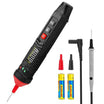
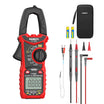
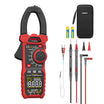
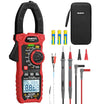












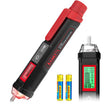
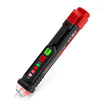
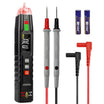
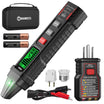
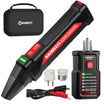



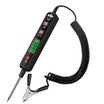
































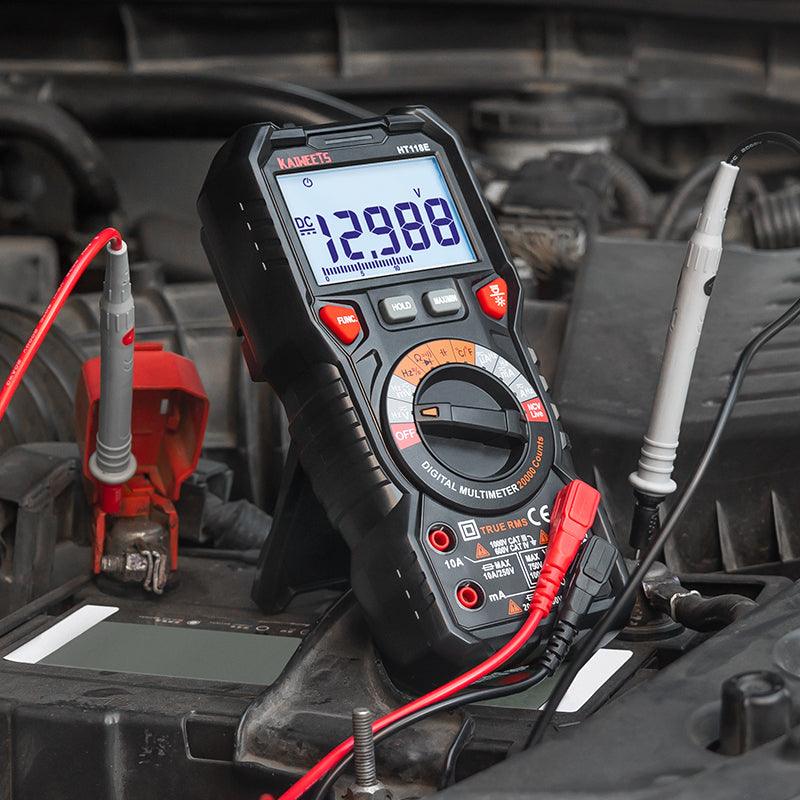
If your car is slow to start or will not start at all, you can test the car battery at home with a digital multimeter before deciding what to do next. A few simple voltage checks can show whether the battery is discharged and whether the charging system is producing voltage.
This guide explains how to measure resting voltage, cranking voltage, and charging-system voltage safely. Keep in mind that a normal resting voltage does not always mean the battery is healthy, because a weak battery may still fail when the starter draws a heavy load.
This procedure is for a vehicle’s low-voltage 12-volt battery. Do not touch orange high-voltage cables or traction-battery components in a hybrid or electric vehicle. If the 12-volt battery is swollen, cracked, leaking, frozen, or unusually hot, stop and have it inspected professionally.
What do you need to test a car battery?
You need a digital multimeter with a DC-voltage setting, plus basic eye and hand protection.
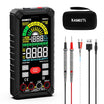
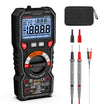
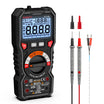
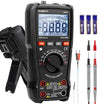
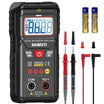
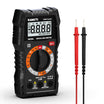
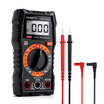
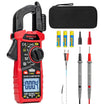
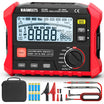
A digital multimeter
Use a multimeter that can measure at least 15 volts DC. An auto-ranging meter will select the range for you. On a manual-ranging model, choose the 20 V DC range or the next range above 15 V.
Insert the black lead into COM and the red lead into the V/Ω jack. Before testing, make sure you understand how to use a multimeter, especially how to select the correct input jack and measurement mode. Do not place the red lead in the amps jack for this test.
Safety glasses and gloves
Wear safety glasses and suitable gloves before working near a lead-acid battery. Remove metal jewelry, keep sparks away, and work in a ventilated area.
An optional battery charger
A charger is not required to take a voltage reading. It is useful when the battery is discharged and needs to be fully charged before a more meaningful retest. Use a charger that matches the battery type and follow its instructions.

How do you test a car battery with a multimeter?
Test the battery in three stages: measure it at rest, watch the voltage while the engine cranks, and then check the voltage with the engine running.
Step 1: Park safely and inspect the battery
Put the vehicle in Park or Neutral, apply the parking brake, and switch off the ignition. Turn off lights and accessories before opening the hood.
Check the battery case and terminals before connecting the meter. Do not continue if you see a leak, a split case, heavy swelling, or a loose battery that can move in its tray.
Step 2: Remove surface charge
A recently driven or charged battery may show an artificially high reading. Turn the headlights on for about two minutes, then turn them off. Wait briefly before measuring.
If the vehicle has been parked with the engine off for several hours, this step is usually less important.
Step 3: Set the multimeter to DC voltage
Select DC volts, shown as V⎓ or a V beside a solid line over a dashed line. Although multimeter symbols can vary slightly by model, this marking distinguishes DC voltage from the V~ setting used for AC voltage. Use the 20 V range on a manual-ranging meter.
Touch the red probe to the positive terminal marked +. Touch the black probe to the negative terminal marked −. A negative number usually means the probes are reversed.
Step 4: Read the resting voltage
A fully charged conventional 12-volt lead-acid battery commonly reads about 12.6 to 12.8 volts at rest. A lower reading usually means the battery is partly discharged, but it does not automatically mean the battery must be replaced.
If the reading is low, charge the battery with the correct charger and test it again after it has rested. A battery that repeatedly loses charge may be failing or may be affected by a charging-system problem or an electrical drain.
Step 5: Check the voltage while cranking
Keep the probes securely on the battery terminals and have another person start the engine. Watch the lowest voltage shown while the starter is turning.
At moderate temperatures, a drop below about 9.6 volts can point to a weak battery, poor cable connections, or excessive starter current. Cold weather can reduce cranking voltage, so use the vehicle manufacturer’s specification when available.
Do not let the probes or leads contact belts, fans, or other moving parts. A meter with MIN/MAX capture is safer and easier to read during this test.
Step 6: Check the charging-system voltage
With the engine running, measure across the battery terminals again. Many conventional charging systems read roughly 13.7 to 14.7 volts, although the result can change with temperature and electrical load.
Modern smart-charging systems may deliberately vary the voltage. A single reading outside the common range does not prove that the alternator is faulty. Compare the result with the service information for your vehicle, especially if a battery or charging warning light is on.
Never try to measure the battery’s starter current by placing a multimeter in amps mode directly across the positive and negative terminals. That creates a near short circuit and can damage the meter, melt a lead, or cause serious injury.
How do you interpret car battery voltage readings?
The reading changes meaning depending on whether the battery is resting, cranking the engine, or being charged.
| Test condition | Typical reading | What it may indicate |
|---|---|---|
| Engine off, battery rested | About 12.6–12.8 V | The battery is near a full state of charge. |
| Engine off, battery rested | About 12.4 V | The battery is partly discharged and may need charging. |
| Engine off, battery rested | About 12.2 V | The battery is substantially discharged. Charge it before judging its condition. |
| Engine off, battery rested | About 12.0 V or lower | The battery is deeply discharged. Avoid repeated starting attempts. |
| During cranking | About 9.6 V or higher at moderate temperature | The starting-voltage result is generally acceptable, subject to vehicle specifications. |
| Engine running | Often about 13.7–14.7 V | The charging system is producing voltage, but smart systems can operate outside this range. |
These figures are useful screening values rather than universal pass-or-fail limits. Battery chemistry, temperature, and the vehicle’s charging strategy can all affect the result.
A resting reading tells you the approximate state of charge. A professional conductance or load test is better for deciding whether the battery can still deliver its rated starting power.
How do you check battery terminals and connections?
Start with a visual and physical inspection because loose or corroded connections can imitate a weak battery.
Look for white, blue, or green corrosion around the posts and cable clamps. The clamps should sit firmly on the posts and should not rotate by hand.
If cleaning is necessary, follow the battery and vehicle manufacturer’s procedure. In many vehicles, the negative cable is disconnected first and reconnected last. Disconnecting a battery can erase saved settings or require a battery-management reset, so check the owner’s manual before removing a cable.
A static resistance check is not the best way to find a poor high-current connection. A proper voltage-drop test must be performed while current is flowing, usually during cranking. Because this requires working near moving parts and the starter circuit, have a qualified technician perform it if you are not familiar with automotive electrical testing.

What are the signs of a weak or failing car battery?
A weak battery often shows up as slow cranking or repeated starting trouble, but some batteries fail with little warning.
- The starter turns the engine more slowly than usual.
- Interior lights dim sharply during starting.
- The battery or charging warning light remains on.
- The battery repeatedly needs a jump-start or recharge.
- The case is swollen, cracked, or leaking.
These symptoms are not unique to the battery. Loose cables, a starter problem, or a faulty charging system can produce similar results. If the battery is fully charged but the symptoms continue, arrange a complete battery, starting-system, and charging-system test.
Frequently Asked Questions
These answers cover the most common questions that arise after a basic multimeter test.
What can drain a car battery when the car is off?
A light left on or an accessory that never shuts down can drain the battery. A faulty module or alternator diode may also create a parasitic draw.
Some current draw is normal because security systems and vehicle computers remain active. Diagnosing an excessive draw requires the vehicle to enter sleep mode and the meter to be connected correctly in series or used for a fuse voltage-drop test. Do not begin by placing a meter in amps mode across the battery terminals.
How many years do car batteries last?
Many automotive batteries last about three to five years. Heat, vibration, short trips, and repeated deep discharge can shorten that life.
Age alone does not prove that a battery is bad. Once it reaches about three years old, periodic testing can reduce the chance of an unexpected no-start.
Can you test a car battery without a multimeter?
You cannot obtain an accurate battery-voltage reading without a voltmeter or multimeter. A dashboard gauge or warning light may reveal a charging problem, but it is not a substitute for a battery test.
Without a meter, the practical option is to use a dedicated battery tester or ask a repair shop or battery retailer to perform a conductance test.
Does 12.6 volts mean the battery is good?
No. A reading near 12.6 volts usually means the battery is well charged at that moment. It does not confirm that the battery can maintain voltage under starter load.
If the engine cranks slowly despite a normal resting reading, check cranking voltage and the cable connections. A professional load or conductance test can then confirm battery condition.
Why is the engine-running voltage lower than expected?
A low reading can come from an undercharged battery, poor connections, or a charging-system fault. It may also be normal behavior for a vehicle with computer-controlled smart charging.
Repeat the test with the headlights and blower operating, then compare the result with the vehicle manufacturer’s specification. Seek professional diagnosis if the warning light is on or the battery continues to discharge.

Conclusion
A multimeter is useful for checking a car battery’s state of charge and observing voltage during starting. It can also provide an initial view of charging-system output.
Do not replace a battery based on one low resting reading. Charge it, inspect the connections, and retest. If the battery is charged but still drops excessively during cranking, have it tested with equipment designed to evaluate starting capacity.
Dig deeper:

Leave a comment
All comments are moderated before being published.
This site is protected by hCaptcha and the hCaptcha Privacy Policy and Terms of Service apply.