











Circuit Breaker Finder
What is a circuit breaker finder?
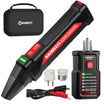
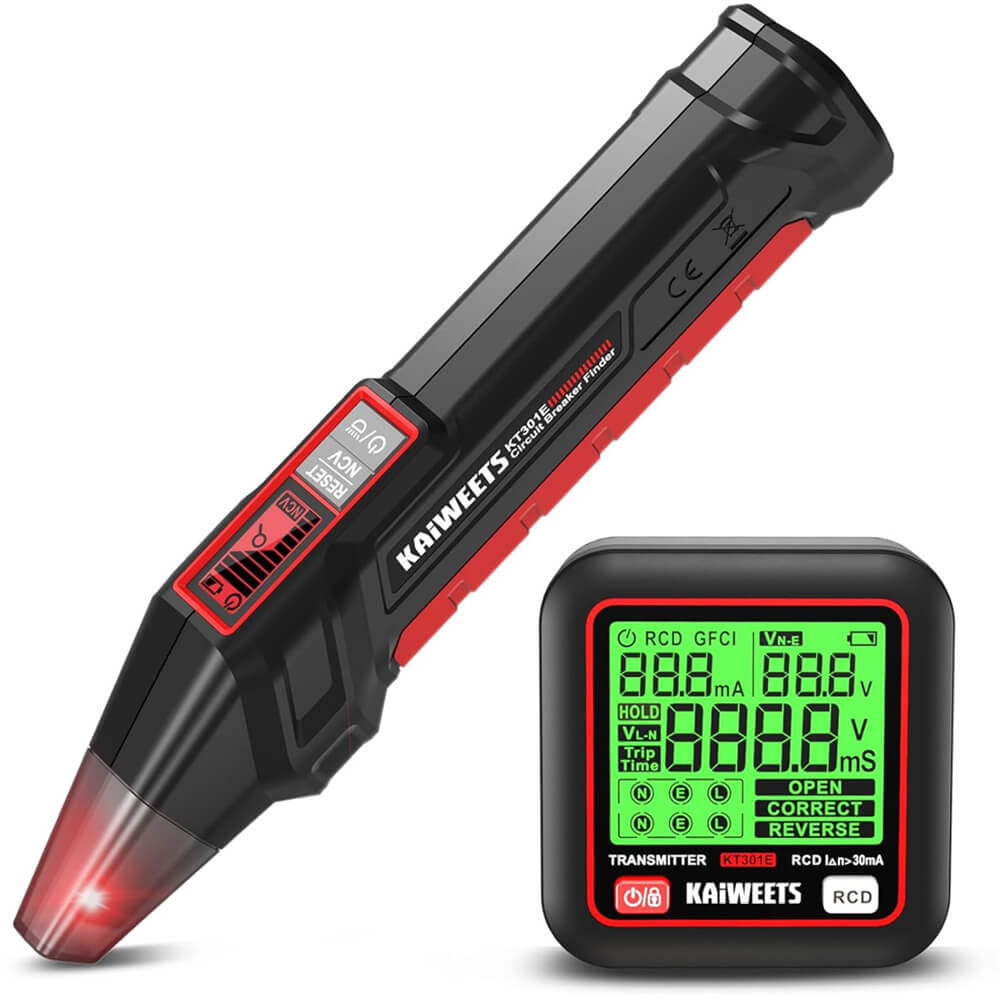
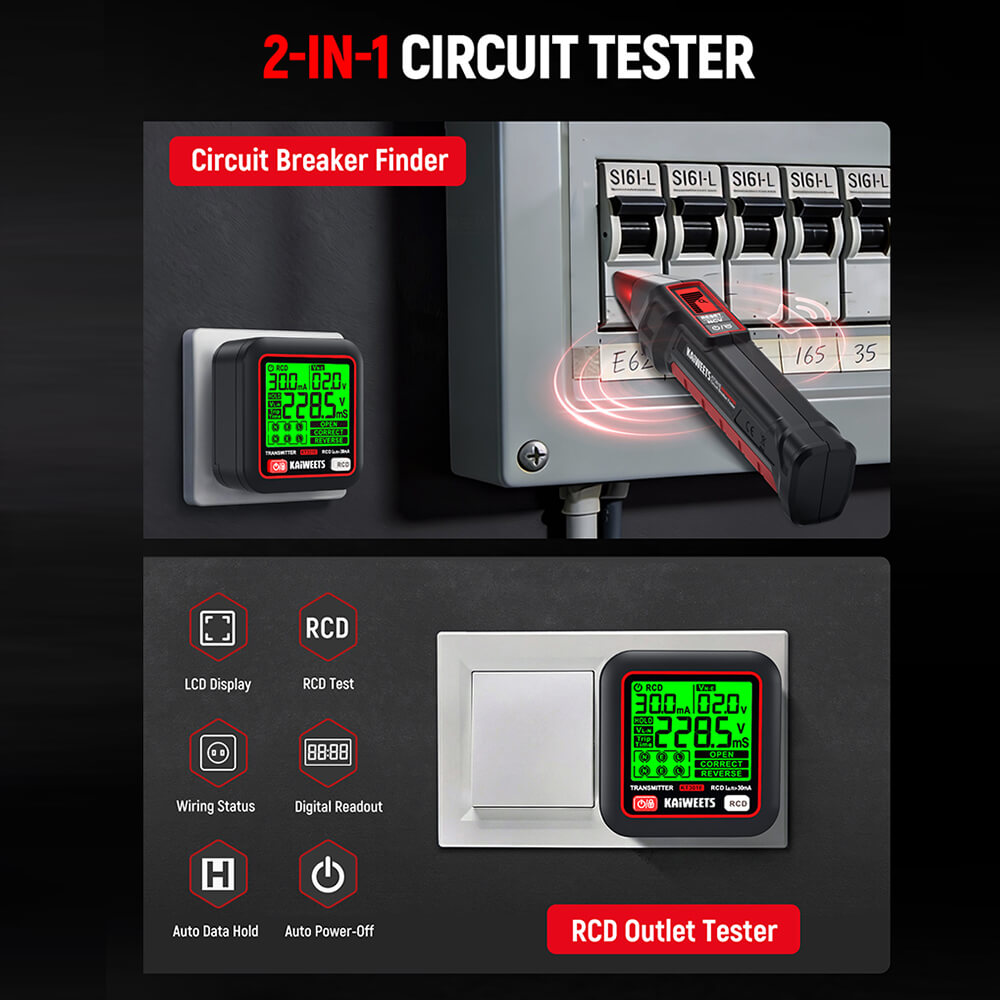
A circuit breaker finder is a circuit-tracing tool that helps you identify which breaker controls a specific outlet, light, or wired circuit. Instead of switching breakers on and off by guesswork, you connect a transmitter to the target circuit and use a receiver at the panel to locate the matching breaker quickly and safely.
What is a circuit breaker finder used for?
Use a circuit breaker finder to pinpoint the correct breaker when panels are unlabeled, circuits are unknown, or multiple breakers serve similar areas. It is widely used by electricians, maintenance engineers, facility and plant managers, inspectors, property teams, and DIY homeowners who need fast, reliable circuit identification.
Common use cases include:
- Locating a fault breaker without trial-and-error shutoffs
- Mapping circuits and labeling panels during installation, renovation, or inspection
- Troubleshooting outlets, lighting runs, and equipment circuits in homes, buildings, and industrial sites
How does a circuit breaker finder work?
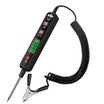
A circuit breaker finder works through a transmitter-receiver system. The transmitter sends a tracing signal through the circuit wiring. The receiver detects that signal at the breaker panel. When you scan breakers, the receiver indicates the strongest signal, showing which breaker matches the circuit you’re tracing.
How to use a circuit breaker finder
- Plug in or connect the transmitter to the outlet, fixture, or circuit you want to trace. Make sure the circuit has power.
- Turn on the receiver and scan slowly across the breakers in your panel.
- Find the breaker that triggers the strongest and most consistent alert on the receiver.
- Scan once more to confirm the signal stays strongest on the same breaker, then check nearby breakers to rule out false positives.
- Switch the identified breaker off briefly to confirm, then label it for future reference.
Learn more about how to use a circuit breaker finder over on our blog.
FAQ
What are the differences between KAIWEETS KT301P, KT302P, and KT303P? Which one should I choose?
A: All three models are premium tools designed to locate breakers accurately, but they offer distinct features tailored to different users and environments:
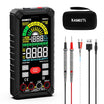
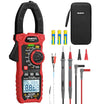
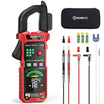
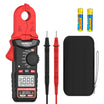
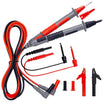
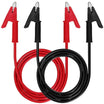
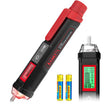
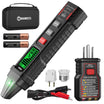
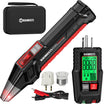
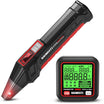
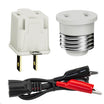
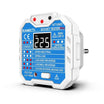
- KT301P (Digital Screen & High Cost-Performance):Core Feature: The receiver features a digital display screen that shows signal strength numbers, making operation incredibly clear.Highlights: The transmitter functions as a standalone socket tester with a voltage display. It comes fully loaded with a hard case, alligator clips, and adapters.
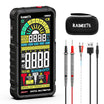
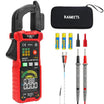
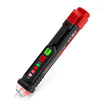
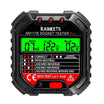
- KT302P (Innovative Dual-Direction Signal Pro):Core Feature: Features an industry-first dual-direction circuit design. Compared to the single-direction vertical test of the 301 series, it scans wider and more comprehensively, drastically improving accuracy and reducing signal bleed.Highlights: It uses bright LED indicators instead of a screen, and the transmitter clearly shows wiring status at a glance. Includes full accessories (alligator clips/adapters).
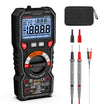
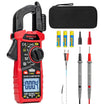
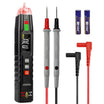
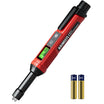
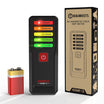
- KT303P (The Ultimate 4-in-1 Flagship):Core Feature: The next-generation flagship that upgrades from a 3-in-1 to a 4-in-1 multi-functional design.Highlights: It uniquely integrates a detachable screwdriver directly onto the NCV tip, making it a true 4-in-1 tool. Additionally, the transmitter and receiver feature an integrated docked design, allowing the transmitter to be neatly plugged into and stored directly inside the receiver when not in use. It features clear LED indicator lights.
Decision Guide:
- Choose KT301P if you prefer a visual digital screen and traditional workflow.
- Choose KT302P if you work in complex electrical environments and need maximum scanning accuracy via dual-direction signals.
- Choose KT303P if you want the ultimate convenience—an all-in-one tool with an integrated screwdriver and a docked storage design so you never misplace your transmitter.
What does the "4-in-1 function" of the KT303P include?
A: The KT303P is designed to streamline your tool belt by combining four essential functions into one sleek device:
- Circuit Breaker Finder: Fast and accurate breaker tracking.
- Socket & GFCI Tester: Quick outlet wiring diagnostics and safety trip testing.
- Non-Contact Voltage (NCV) Detector: Safe voltage detection without stripping wires.
- Integrated Screwdriver: A built-in screwdriver bit attached right to the NCV tip, perfect for opening electrical panels or outlet faceplates on the go.
How does the integrated receiver and transmitter design benefit me?
This feature is exclusive to our premium KT303P model. Traditional circuit breaker finders come as two completely separate pieces, which can easily be misplaced in a crowded tool bag. The KT303P receiver has a dedicated dock built into its body, allowing you to slide and click the transmitter right into the receiver for secure, compact storage and easy carrying.
Can the transmitter be used on its own, or does it only work with the receiver?
The transmitter is highly versatile! It is designed to function perfectly as a standalone socket tester. When plugged into an outlet, it will automatically test the wiring sequence (Correct, Open Ground, Open Neutral, Open Hot, Hot/Ground Reverse, etc.) and display the live voltage, providing you with a quick one-stop diagnostic tool.
What does the "3-in-1 function" mean for these circuit breaker finders?
A: It means you are getting three essential electrical tools packed into one single device:
- Circuit Breaker Finder: Quickly pairs transmitters and receivers to locate the exact breaker.
- Socket / GFCI Tester: Diagnoses outlet wiring faults and tests GFCI trip functions.
- Non-Contact Voltage (NCV) Detector: Safely tests whether a wire, conduit, or socket is energized without direct contact.
How do I perform a GFCI test with the KT301P or KT302P?
Simply plug the transmitter into the GFCI socket you wish to test. Ensure the wiring is correct first (indicated by the screen or lights), then press the GFCI test button. If the circuit breaker or GFCI outlet trips as intended, your ground fault protection is working safely and correctly.
Are circuit breaker finders worth it?
Yes — if you ever deal with unlabeled panels, unknown circuits, or frequent troubleshooting. A breaker finder saves time, reduces trial-and-error shutoffs, and helps you work safer by locating the right breaker fast. For pros and facility teams, it quickly pays for itself in labor time saved.
How do I locate my circuit breaker?
Start by identifying the device or outlet you want to trace. Plug the transmitter into that outlet (or connect it to the circuit), then scan the breakers with the receiver. The breaker with the strongest alert is the match. This avoids trial-and-error flipping.
Does a circuit breaker finder work on a dead outlet?
Usually, no. A breaker finder needs a live path to send a signal through the wiring. If the outlet is truly dead, first check for a tripped GFCI upstream, a loose connection, or a switched outlet. Once power is restored, the finder will work normally.
How to find circuit breaker box?
In most homes, the breaker box is in a garage, basement, utility room, laundry area, or an exterior wall near the meter. In apartments, it may be inside a hall closet or a shared electrical room. If you’re unsure, check near where power enters the building.
Can I use the transmitter as a standard outlet tester by itself?
A: Absolutely. For all three models (KT301P, KT302P, and KT303P), the transmitter is fully capable of acting as an independent socket tester. Simply plug it into any standard live outlet, and it will immediately run a diagnostic check on the wiring sequence (such as Open Ground, Open Neutral, or Correct Wiring) via its built-in display screen or LED indicator lights.