


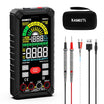
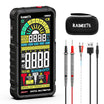
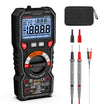
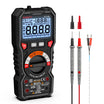
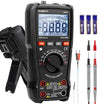

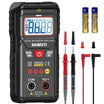
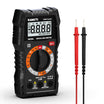
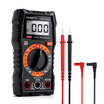
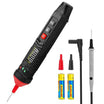
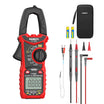
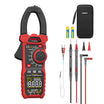
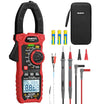
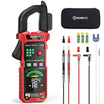
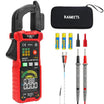
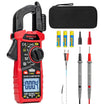
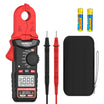

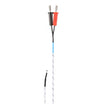
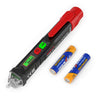
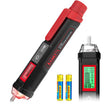


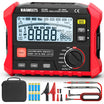














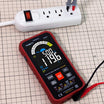
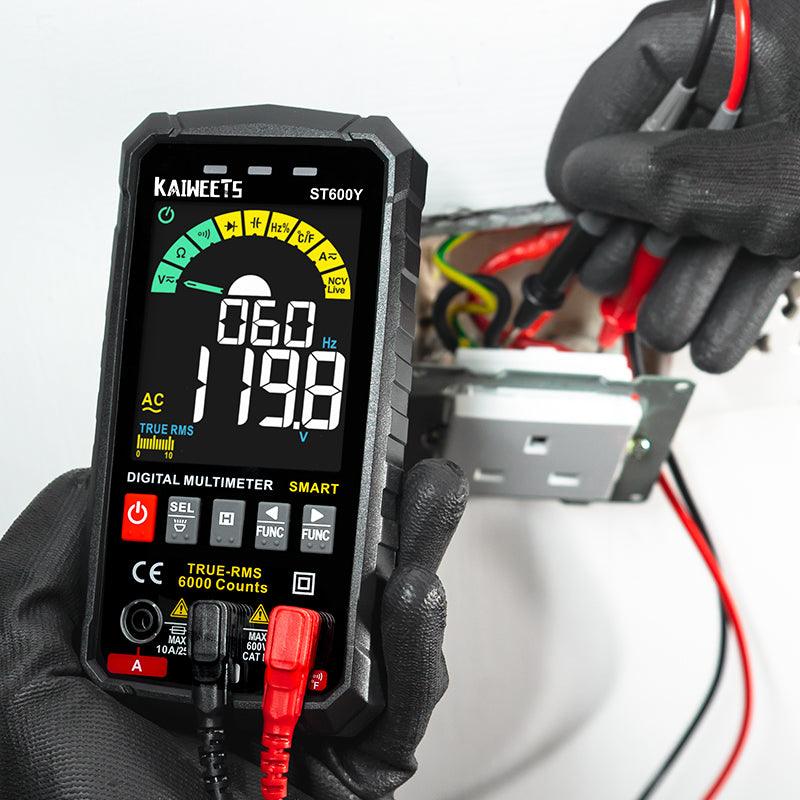
If an outlet stops powering your device, the problem may be no voltage, a loose connection, reversed polarity, or a grounding issue. A digital multimeter can help you do a basic check safely when it is set up correctly.
A household “110V outlet” in North America is usually a 120V receptacle. In normal use, a multimeter reading around 110 to 125 volts AC is common. The exact number can vary slightly because of utility supply, circuit load, and wiring condition.
What do you need before testing a 110V outlet?
You only need a properly rated digital multimeter and safe test leads for a basic outlet voltage check.
- A digital multimeter with an AC voltage setting, usually marked V~
- Test leads with intact insulation and clean probe tips
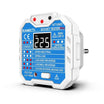
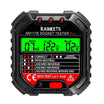
- A plug-in outlet tester, optional, for a quick polarity check
Before you test a live outlet, make sure you know where the COM jack, voltage jack, and AC voltage setting are on your meter. The AC voltage setting is usually marked as V~, though multimeter symbols can look slightly different from one model to another. If you are not familiar with these basics, review this guide on how to use a multimeter before working near household voltage.

How do you test a 110V outlet with a multimeter?
Use the AC voltage setting and take your readings from the front slots of the receptacle. You do not need to remove the faceplate for a basic outlet check.
On a typical grounded outlet, the shorter vertical slot is hot, the wider vertical slot is neutral, and the round or U-shaped opening is ground. Keep your fingers behind the probe guards. Do not touch the metal probe tips while the probes are in the outlet.
- Set the multimeter to AC voltage. Turn the dial to V~. Insert the black lead into COM and the red lead into the voltage jack. If your meter is manual-ranging, choose a range above 120V.
- Check hot to neutral. Place one probe in the wider neutral slot and the other probe in the shorter hot slot. A normal reading is usually about 110 to 125V AC.
- Check hot to ground. Place one probe in the ground opening and the other probe in the shorter hot slot. This reading should be close to the hot-to-neutral reading.
- Check neutral to ground. Place one probe in the neutral slot and the other probe in the ground opening. This should be close to 0V. A small reading can appear when the circuit is under load.
How do you read the outlet test results?
The three readings together give you a clearer picture than one voltage reading alone. Use the table below as a basic guide, not as a substitute for a full electrical inspection.
| Test point | Normal reading | What an unusual reading may mean |
|---|---|---|
| Hot to neutral | About 110 to 125V AC | No power, low voltage, loose wiring, or a problem upstream |
| Hot to ground | Close to the hot-to-neutral reading | Missing ground, poor ground path, or wiring issue |
| Neutral to ground | Close to 0V | Neutral problem, shared load issue, or wiring fault |
If hot-to-neutral reads normal but hot-to-ground does not, the outlet may not have a reliable ground path. If the shorter slot does not behave like the hot side, the outlet may be miswired. Stop using the outlet until it is checked.
Can a multimeter confirm that an outlet is grounded?
A multimeter can give you a useful grounding clue, but it cannot prove that the grounding system is safe under real fault conditions.
If hot-to-ground reads close to hot-to-neutral, the outlet likely has a ground path. If neutral-to-ground is close to 0V, that also supports a normal basic reading. However, a multimeter cannot always detect every unsafe wiring condition, including some false or bootleg grounds.
If the outlet is in a bathroom, kitchen, garage, basement, laundry area, or outdoor location, GFCI protection may also matter. A voltage reading does not replace a GFCI test.

How do you test a GFCI outlet?
Use the TEST and RESET buttons on the GFCI outlet in addition to checking voltage with a multimeter.
- Plug in a small lamp or similar device.
- Press the RESET button so the device turns on.
- Press the TEST button. The device should turn off.
- Press RESET again. The device should turn back on.
If the device does not turn off when TEST is pressed, the GFCI may not be protecting the outlet correctly. Replace it or have it checked by a qualified electrician.
What mistakes should you avoid when using a multimeter on an outlet?
The most important mistake is using the wrong meter setting on a live receptacle. Household outlets should be checked with AC voltage mode, not resistance, continuity, or current mode.
- Do not use the current setting. Never place the probes across an outlet while the red lead is in the amp jack. This can short the circuit and damage the meter.
- Do not use resistance or continuity on a live outlet. These settings are for unpowered circuits only.
- Do not remove the faceplate for a simple voltage test. Testing from the front slots is safer for most basic checks.
- Do not use damaged leads. Cracked insulation or loose probe tips increase shock risk.
- Do not ignore signs of heat or damage. A warm outlet, buzzing sound, burn mark, or loose plug fit should be inspected.
When should you call an electrician?
You should call an electrician when the readings are abnormal, the outlet shows damage, or you are not comfortable working near live voltage.
Stop using the outlet if you see burn marks, melted plastic, sparks, or a loose receptacle. You should also get help if a breaker keeps tripping, a GFCI will not reset, or the voltage changes sharply when a device is plugged in.
A multimeter is useful for basic troubleshooting, but it does not replace proper repair. Wiring faults can create shock and fire risks even when an outlet appears to work.
Frequently asked questions
Is a 110V outlet the same as a 120V outlet?
In everyday language, people often say 110V, 115V, or 120V for the same type of standard household outlet in North America. The modern nominal voltage is commonly referred to as 120V, but real readings can vary within a normal range.
What should a 110V outlet read on a multimeter?
A typical working outlet often reads about 110 to 125V AC from hot to neutral. Hot to ground should be close to the same reading. Neutral to ground should be close to 0V.
Which multimeter setting should I use for an outlet?
Use the AC voltage setting, usually marked V~. Do not use the amp, resistance, or continuity setting on a live outlet.
Can I test an outlet with continuity mode?
No. Continuity mode should only be used on circuits that are fully powered off. Using continuity mode on a live outlet can damage the meter and create a safety hazard.
Can I use a 110V appliance in a 220V country?
Do not plug a 110V-only appliance directly into a 220V outlet. Check the appliance label first. If it is not rated for the local voltage, you may need a proper voltage converter, not just a plug adapter.
Dig deeper:
How to Use a Multimeter to Test an Outlet

Leave a comment
All comments are moderated before being published.
This site is protected by hCaptcha and the hCaptcha Privacy Policy and Terms of Service apply.