

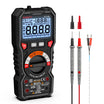
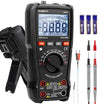

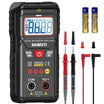
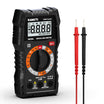
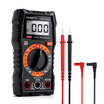
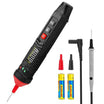
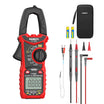
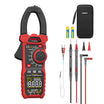
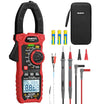
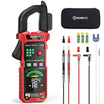
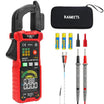
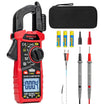
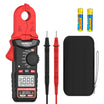




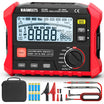












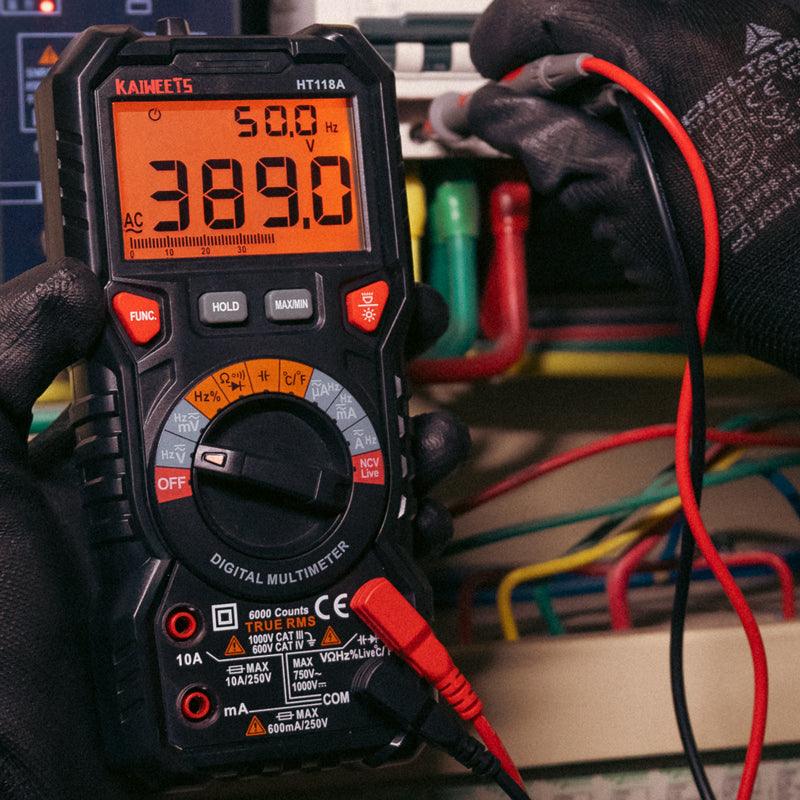
To measure voltage with a multimeter, select the correct AC or DC voltage mode, connect the test leads to the proper input jacks, and place the probes across the two points you want to compare. The meter will display the voltage difference between those points.
This guide focuses on basic voltage measurements that can be performed with a digital multimeter. If you are still getting familiar with the meter's controls, this beginner guide on how to use a multimeter explains the main functions in more detail.
Household mains voltage can cause serious injury or death. Beginners should practice with batteries and other low-voltage sources. Do not test exposed wiring, electrical panels, or 240V circuits unless you are trained to work safely around energized equipment.
What Does a Multimeter Measure?
A multimeter is an electrical testing tool that measures the difference in voltage between two points in a circuit. Most digital multimeters can also measure resistance and current.
Voltage testing is useful when you need to confirm whether a power source is working or check whether its output is close to the expected value. For example, you can test a household battery before deciding whether it needs to be replaced.

Which Multimeter Setting Should You Use?
The correct setting depends on whether the source produces alternating current or direct current.
| Voltage Type | Common Symbol | Typical Application |
|---|---|---|
| AC voltage | V~ | Household outlets and mains-powered equipment |
| DC voltage | V⎓ | Batteries and low-voltage electronic circuits |
Some meters place AC and DC voltage on separate dial positions. Others use one voltage position with a Select or Function button.
If the icons on your meter are unfamiliar, this guide to common multimeter symbols can help you identify the correct mode.
An auto-ranging multimeter selects the measurement range automatically. With a manual-ranging meter, choose a range higher than the voltage you expect. You can move to a lower range afterward if you need a more precise display.
How Do You Measure Voltage With a Multimeter?
Voltage is measured by placing the probes across two points while the multimeter remains connected in parallel with the power source or circuit.
- Inspect the meter and test leads. Do not use them if the insulation is cracked or the probe tips are damaged. Confirm that the meter and leads are rated for the voltage and measurement environment.
- Connect the black lead to COM. COM is the common input jack used for most multimeter measurements.
- Connect the red lead to the voltage jack. This jack is usually marked V, VΩ, or a similar symbol. Do not place the red lead in an A or mA current jack when measuring voltage.
- Select AC or DC voltage. Use V~ for alternating voltage and V⎓ for direct voltage. On a manual-ranging meter, begin with a range above the expected value.
- Place the probes across the test points. For DC voltage, place the black probe on the negative point and the red probe on the positive point. AC voltage does not have the same positive and negative polarity, but you still need to identify the correct test points.
- Read the display. Keep your fingers behind the probe guards and do not touch the exposed metal tips.
- Disconnect the probes safely. Remove the red probe first, followed by the black probe. Turn the meter off when the test is complete.
Do not touch the probes together to verify the voltage function. A beep from touching the probes together normally belongs to continuity mode and does not confirm that the meter can measure voltage correctly.
Before measuring hazardous voltage, trained users should verify the meter on a known working voltage source. It should be checked again after the measurement. This helps confirm that the meter and leads remained operational throughout the test.
How Do You Measure Common Voltages at Home?
The basic process is the same for each voltage source, but the meter setting and probe positions must match the application.
How to Measure a Battery's DC Voltage
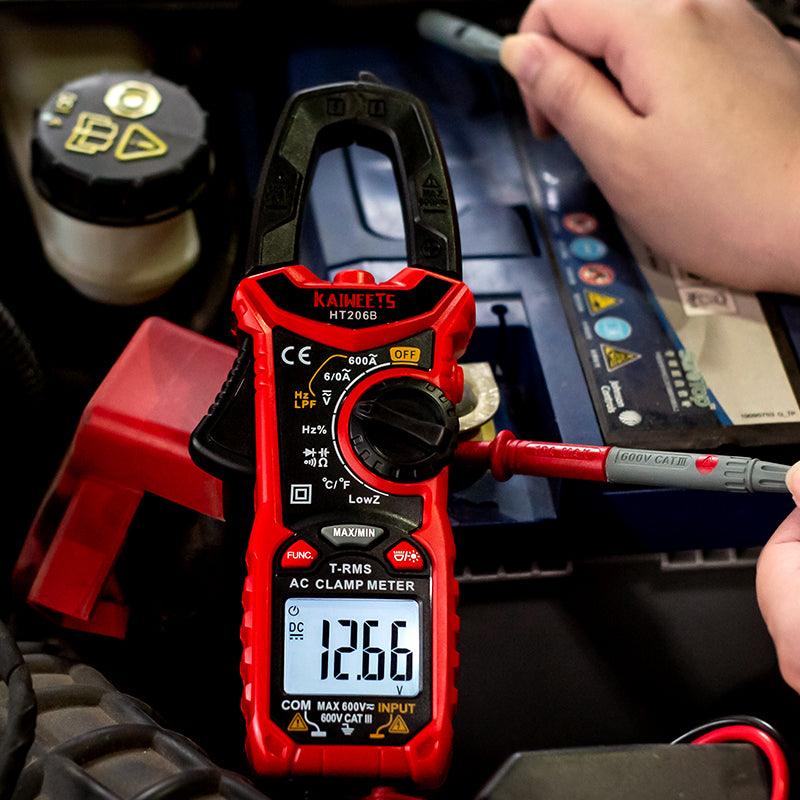
A household battery is one of the safest places to practice measuring voltage because it uses low-voltage DC power.
- Connect the black lead to COM and the red lead to the VΩ jack.
- Set the multimeter to DC voltage, shown as V⎓.
- Place the black probe on the negative battery terminal.
- Place the red probe on the positive battery terminal.
- Compare the displayed value with the voltage printed on the battery.
A fresh 1.5V battery should normally read near its rated voltage when it is not powering a device. The exact reading that indicates replacement depends on the battery chemistry and the equipment using it.
If a minus sign appears before the reading, the probes are reversed. This does not usually damage a digital multimeter. Swap the probes if you want the value to appear as a positive number.
How to Measure a 120V Household Outlet
A typical North American household outlet provides approximately 120V AC between the hot and neutral connections.
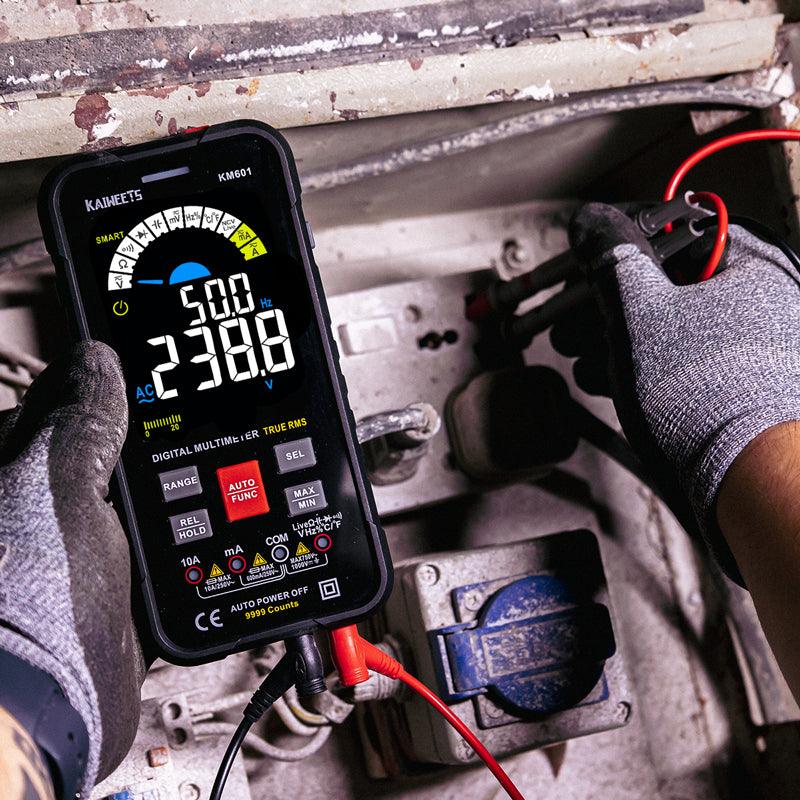
Testing an intact outlet requires an AC voltage setting and a meter that is properly rated for household mains. The black lead remains in COM, while the red lead stays in the voltage jack.
Do not use the grounding connection as a routine substitute for neutral. Ground is a protective conductor and is not intended to carry current during normal operation.
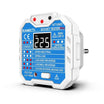
Live outlet testing carries a shock risk. Do not continue if the receptacle is damaged, loose, discolored, or wet. A plug-in receptacle tester is often a safer first check for basic outlet wiring problems.
How to Measure a 240V Circuit
In a typical North American split-phase system, approximately 240V is measured between the two hot conductors.
On a four-wire 120/240V circuit, each hot conductor may also measure approximately 120V to neutral. The correct probe positions and expected readings depend on the outlet configuration, so checking 240V with a multimeter requires a more specific process than testing a standard 120V outlet.
Because 240V circuits commonly supply high-power appliances, they may involve larger conductors and higher available fault current. Do not remove covers or probe exposed terminals unless you are qualified to perform energized electrical testing.
How Should You Interpret the Voltage Reading?
The displayed number should be compared with the rated voltage of the battery, device, or circuit being tested.
| Display Result | What It May Mean |
|---|---|
| A normal positive value | The voltage is present and the DC probes are connected with the expected polarity. |
| A negative DC value | The red and black probes are connected in reverse polarity. |
| 0V or close to 0V | The source may be off, discharged, disconnected, or not being contacted correctly. |
| OL or an overrange indication | The selected range may be too low, or the meter may not support the measurement. |
| An unstable reading | The probe contact may be poor, or the measured voltage may be changing. |
A voltage reading alone does not always prove that a circuit can operate correctly under load. A weak battery, for example, may show a reasonable open-circuit voltage but drop significantly when it powers a device.
What Safety Rules Matter Most When Measuring Voltage?
Safe voltage measurement begins with the correct meter setup and a clear understanding of the circuit being tested.
- Inspect the meter, probes, and test leads before every use.
- Use equipment rated for the circuit voltage and measurement category.
- Keep the red lead out of the A or mA current jack.
- Keep your fingers behind the guards on the probes.
- Do not touch exposed conductors with your hands.
- Do not work in wet conditions or use a damaged outlet.
- Do not change input jacks while the probes are connected to a live circuit.
- Stop immediately if you notice heat, smoke, arcing, or damaged insulation.
Voltage is normally measured while a source is energized. Resistance and continuity tests are different and should be performed only after power has been disconnected and stored energy has been safely discharged.
What Are the Most Common Voltage-Testing Mistakes?
Most voltage-testing problems come from an incorrect meter setup rather than from the voltage source itself.
- Using the wrong mode: DC mode will not provide a reliable reading for normal household AC power.
- Using the current input: Connecting a meter across a voltage source while the red lead is in a current jack can create a short circuit.
- Selecting a range that is too low: The display may show OL or another overrange warning.
- Testing the wrong points: Voltage is always the difference between two specific test points.
- Assuming continuity mode checks voltage: A continuity beep does not verify the voltage-measurement function.
- Ignoring the meter's ratings: A meter's maximum displayed voltage does not automatically make it suitable for every electrical environment.
Frequently Asked Questions
Can a Multimeter Measure Both AC and DC Voltage?
Yes. Most digital multimeters can measure both AC and DC voltage, but they use different settings. AC voltage is commonly marked V~, while DC voltage is marked V⎓.
What Is the Normal Voltage in a House?
In a typical North American home, standard receptacles provide a nominal 120V supply. Larger appliances may use a nominal 240V circuit.
Other countries use different household voltage systems, so always check the local supply specification before testing.
Can You Measure Voltage With the Power Turned Off?
A fully de-energized source should produce a reading near 0V. To measure the operating voltage of a source, the voltage must be present during the test.
This does not mean exposed live testing is appropriate for an inexperienced user. Testing inside fixed wiring or an electrical panel should be left to a qualified electrician.
Why Does the Multimeter Show a Minus Sign?
A minus sign during a DC voltage test normally means the probes are reversed. The black probe is touching the higher-potential point and the red probe is touching the lower-potential point.
Can You Use Continuity Mode to Check Voltage?
No. Continuity mode is designed for unpowered circuits. Using it on a live circuit may damage the meter and create a safety hazard.
Conclusion
To measure voltage correctly, connect the black lead to COM and the red lead to the voltage input. Choose AC or DC mode before placing the probes across the two test points.
Start with batteries or another low-voltage source until you are comfortable with the meter. Household mains measurements require properly rated equipment and safe testing practices. When exposed wiring or 240V circuits are involved, contact a qualified electrician.

Leave a comment
All comments are moderated before being published.
This site is protected by hCaptcha and the hCaptcha Privacy Policy and Terms of Service apply.