


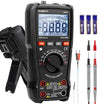

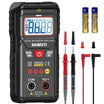
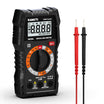
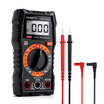
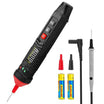
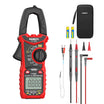
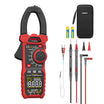
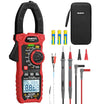
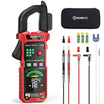

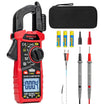
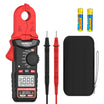
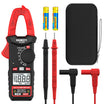

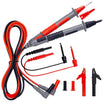
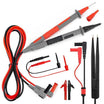


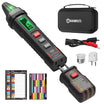

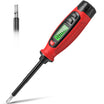
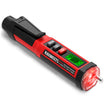
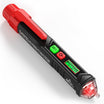
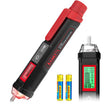



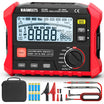
























A digital multimeter can help you check a removed spark plug for an internal open circuit, abnormal resistance, or a short through the insulator. However, it cannot confirm that the plug will produce a strong spark inside a running engine. For a reliable diagnosis, combine the resistance test with a careful visual inspection and the specifications for the exact spark plug fitted to your vehicle.
This guide applies to spark plugs used in gasoline engines. Let the engine cool completely before removing a plug, and follow the removal procedure in your vehicle’s service information.
What can a multimeter tell you about a spark plug?
A multimeter can check the electrical path inside a spark plug, but the result is only one part of the diagnosis.
Most modern vehicles use resistor spark plugs. These plugs contain an internal resistor between the top terminal and the center electrode. Measuring that path can reveal an internal break or a reading that differs greatly from the other plugs in the engine.
A second measurement can check whether the center electrode is shorted to the metal shell. On a clean, dry plug, a standard multimeter should normally show an open circuit between these two points because the ceramic insulator separates them.
The test does not reproduce cylinder pressure or ignition-system voltage. A plug may therefore pass a resistance test and still misfire when the engine is running.
When should you check your spark plugs?
Spark plugs should be inspected at the service interval specified by the vehicle manufacturer or when the engine develops symptoms that could be related to ignition.
If you are unfamiliar with the probe jacks or resistance setting, review how to use a multimeter before starting. This will help you connect the probes correctly and avoid selecting the wrong measurement mode.
Possible warning signs include:
- Engine misfires or rough idling
- Difficult starting
- Weak acceleration
- A noticeable increase in fuel consumption
- A flashing or illuminated check-engine light
These symptoms do not prove that a spark plug is faulty. Ignition coils and fuel-system problems can produce similar behavior, so further diagnosis may be required.
What do you need to test a spark plug?
You need a digital multimeter with an ohms setting and the correct tools for safely removing the spark plug.
- A digital multimeter
- The correct spark plug socket and extension
- A clean, dry cloth
- Your vehicle manual or spark plug manufacturer’s specification
Avoid aggressively cleaning a fine-wire iridium or platinum plug with a wire brush. Its narrow center electrode can be damaged. If the plug is heavily fouled or worn, replacement is usually more reliable than attempting to restore it.
How do you test a spark plug with a multimeter?
To test a spark plug, measure resistance from the top terminal to the center electrode and then check for a short between the center electrode and the metal shell.
1. Allow the engine to cool.
Switch off the ignition and wait until the engine is cool enough to work on safely. Disconnect the ignition coil connector or spark plug lead according to the vehicle manufacturer’s procedure.
2. Remove the spark plug carefully.
Clear loose debris from around the plug well before removal so it cannot fall into the cylinder. Remove one plug at a time if the engine uses separate ignition leads.
3. Inspect and dry the plug.
Check the ceramic insulator for cracks. Look for worn electrodes or heavy deposits. Wipe the terminal and electrode contact points with a dry cloth so dirt does not affect the reading.
4. Set the multimeter to resistance mode.
Select the resistance setting, which is identified by the ohms symbol: Ω.
If the markings on your meter are unfamiliar, the guide to multimeter symbols explains the resistance setting, continuity mode, and common display abbreviations.
Use an automatic resistance range if your multimeter supports auto-ranging. On a manual-ranging meter, begin with a range that can display several thousand ohms.
Do not rely only on the continuity buzzer. Many multimeters stop beeping above a relatively low resistance, while a normal resistor spark plug may measure several thousand ohms.
5. Measure the internal resistance.
Place one probe on the top terminal where the ignition coil or plug lead connects. Place the other probe gently against the center electrode at the firing end.
Do not place the second probe on the curved ground electrode or threaded metal shell for this measurement.
6. Check the insulation between the electrode and shell.
Keep one probe on the center electrode. Touch the second probe to the metal shell or threaded body. A clean, dry plug should normally display OL, infinity, or another open-circuit indication on a standard multimeter.
7. Compare the result with the correct specification.
Check the specification for the exact plug part number. You can also compare plugs removed from the same engine. A single plug with a substantially different reading deserves closer inspection.

What resistance should a good spark plug have?
There is no universal resistance range that applies to every spark plug.
Many resistor plugs are designed with an internal resistance of several thousand ohms. A nominal value near 5 kΩ is common, but the correct value depends on the plug design and part number. Some non-resistor plugs may show very little resistance.
Use the following results as general diagnostic guidance:
| Multimeter result | What it may mean | Recommended action |
|---|---|---|
| Several thousand ohms | This may be normal for a resistor spark plug. | Compare the reading with the manufacturer’s specification and the other plugs. |
| Very low resistance | This may be normal for a non-resistor plug. | Confirm the spark plug type before judging the result. |
| OL or open circuit from terminal to center electrode | The internal electrical path may be broken. | Clean the contact points and repeat the test. Replace the plug if the open reading remains and the plug should contain a resistor path. |
| A reading far above or below the matching plugs | The internal resistor or connection may have deteriorated. | Verify the specification and consider replacing the plug. |
| Continuity from center electrode to metal shell | The plug may be fouled, contaminated, or internally damaged. | Inspect the ceramic and firing end. Replace a cracked or persistently shorted plug. |
Do not rely only on the continuity beeper. Many multimeters stop beeping above a relatively low resistance, so a normal resistor plug may not trigger the audible alert even though the meter displays a valid resistance value.
What can the spark plug’s appearance tell you?
The firing end can reveal wear, fouling, or abnormal operating conditions that an ordinary resistance test may not detect.
| Appearance | Possible meaning | What to do |
|---|---|---|
| Light gray or light brown deposits | The plug may be operating normally. | Check electrode wear and gap before reinstalling it. |
| Dry black soot | The engine may be running rich, or the plug may not be reaching its normal operating temperature. | Check the air-fuel and ignition systems before fitting another plug. |
| Wet, oily deposits | Oil may be entering the combustion chamber. | Have the source of the oil consumption diagnosed. |
| White, blistered, or glazed insulator | The plug may have overheated. | Check the plug heat range and engine operating condition. |
| Rounded or eroded electrodes | The plug has reached or exceeded its useful service life. | Replace it with the specified part number. |
| Cracked ceramic or damaged electrode | The plug is physically unsafe to reuse. | Replace the plug and investigate the cause of the damage. |
Readings and appearance should be considered together. For example, a plug with normal internal resistance may still require replacement if its electrode is badly worn.
What causes a spark plug to fail?
A spark plug usually fails because of normal electrode wear, contamination, overheating, or physical damage.
Carbon fouling
Carbon fouling leaves dry, black deposits on the firing end. It may be linked to an overly rich mixture or repeated short trips with a cold engine.
Oil fouling
Oil fouling produces dark, wet deposits. This often indicates that oil is entering the combustion chamber through worn engine components or a ventilation-system fault.
Overheating
An overheated plug may have a chalky white or glazed insulator. Possible causes include an incorrect heat range or an engine cooling problem.
Excessive electrode wear
The center and ground electrodes gradually erode during normal use. As the gap grows, the ignition system requires more voltage to produce a spark.
Incorrect installation
Too much tightening force can damage the ceramic or internal parts. A loose plug may also overheat because it cannot transfer heat correctly to the cylinder head.
Physical damage
A cracked insulator or bent electrode can result from incorrect removal, improper gap adjustment, or the wrong plug dimensions.
Can a spark plug pass the multimeter test and still be bad?
Yes. A spark plug can show normal resistance and still misfire under cylinder pressure.
A standard multimeter uses a very low test voltage. It cannot reproduce the high voltage supplied by the ignition coil or the pressure inside the combustion chamber.
It also cannot determine how reliably the spark crosses the electrode gap when the engine is under load.
If the spark plug passes the resistance test but the cylinder still misfires, the next step may be to test the ignition coil with a multimeter before replacing additional parts.
Further diagnosis may also include:
- Testing the ignition coil or using an approved spark tester
- Reading misfire fault codes and live data with a scan tool
- Checking fuel delivery to the affected cylinder
- Performing a compression test when a mechanical problem is suspected
Do not hold a spark plug or ignition lead while cranking the engine. Ignition systems generate high voltage and can cause injury or damage sensitive electronic components.
Frequently asked questions
How often should spark plugs be replaced?
Spark plugs should be replaced at the interval listed in the vehicle’s maintenance schedule. The interval varies significantly with the engine and plug design, so a universal 30,000-mile rule is not reliable.
Can you test a spark plug without removing it?
You cannot accurately measure the plug’s internal resistance while it remains connected to the ignition system. An installed-plug diagnosis usually requires scan data or an appropriate ignition tester.
Should you clean a fouled spark plug?
Cleaning may not restore a worn or damaged plug. Avoid using a wire brush on fine-wire iridium plugs because the narrow electrode can be bent or damaged. A heavily fouled plug should normally be replaced after the underlying engine problem is corrected.
Are iridium spark plugs always better than platinum plugs?
Not for every engine. Iridium and platinum designs can offer improved wear resistance, but the correct choice is the plug specified for the vehicle. Do not substitute electrode materials or heat ranges without approved application information.
Should all spark plugs have exactly the same resistance?
Matching plugs from the same engine should usually produce broadly similar readings, but small differences are possible. A large difference is more useful diagnostically than a minor variation.
Conclusion
A multimeter is useful for checking a spark plug’s internal resistance and identifying an obvious electrical short. Measure from the top terminal to the center electrode, then check that the center electrode is not shorted to the metal shell.
Do not judge the plug from one resistance number alone. Confirm the correct specification and inspect the firing end for deposits or damage. If the engine continues to misfire, test the rest of the ignition system or consult a qualified technician.

Technical references: NGK spark plug inspection guidance; DENSO spark plug troubleshooting guide; DENSO spark plug maintenance FAQ; Champion spark plug condition guide.
Dig deeper:

Leave a comment
All comments are moderated before being published.
This site is protected by hCaptcha and the hCaptcha Privacy Policy and Terms of Service apply.