

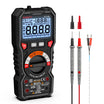
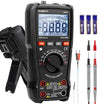

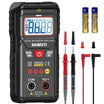
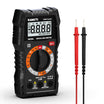
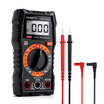
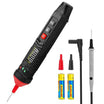
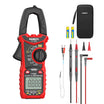
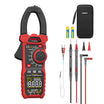
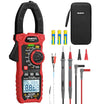
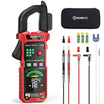
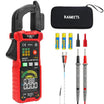
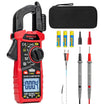
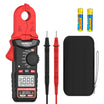

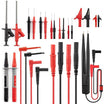
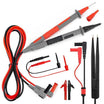

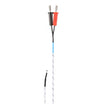
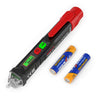
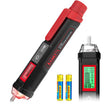
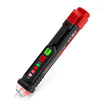
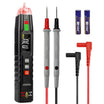
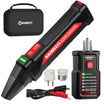
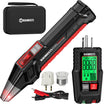
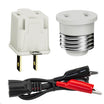


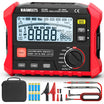










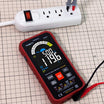
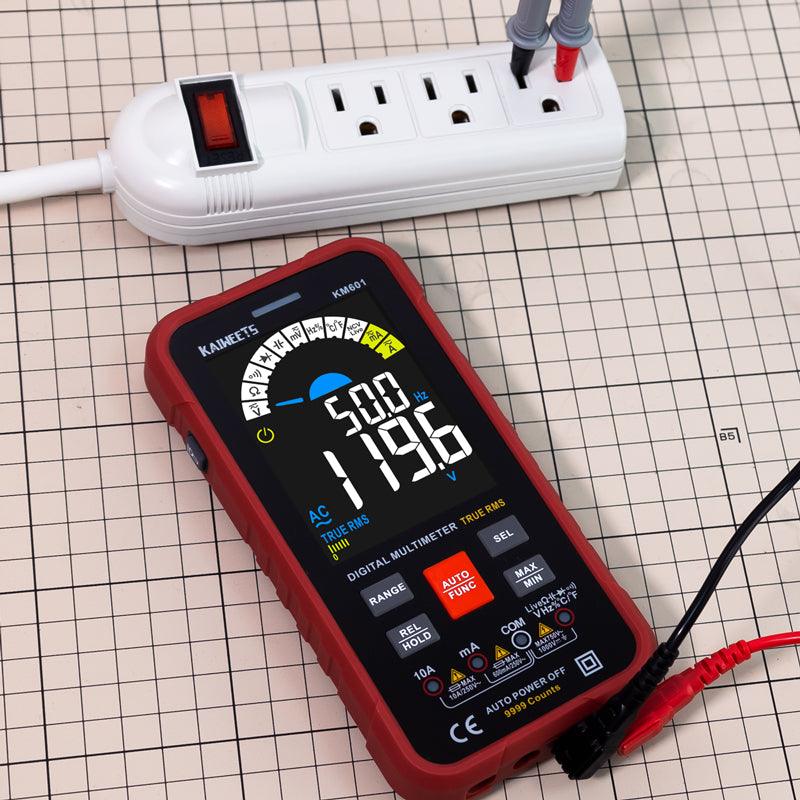
Testing an outlet with a multimeter helps you understand whether an outlet has power, whether the voltage looks normal, and whether there may be a basic wiring issue. It is a useful first check.
What Does Testing an Outlet Usually Mean?
Testing an outlet usually means checking whether voltage is present and whether the outlet behaves the way it should for its type. For a basic household outlet, this often starts with an AC voltage check.
A multimeter can help you answer simple questions:
- Does the outlet have power?
- Is the voltage close to the expected range?
- Does the ground reading look normal?
- Is the outlet completely dead or only failing under load?
A multimeter cannot prove that an outlet is completely safe. It cannot see a loose wire behind the wall. It also cannot confirm that a grounding path will carry fault current safely under real conditions.
This is why outlet testing should be treated as a basic check, not a final safety approval.
What Types of Outlets Can You Check with a Multimeter?
You can check many outlet types with a multimeter, but the method depends on the outlet design and voltage. The most important first step is identifying what type of outlet you are dealing with.
| Outlet type | What a multimeter can help check | Important limit |
|---|---|---|
| Standard 110V/120V household outlet | AC voltage and basic wiring clues | It cannot prove the outlet is fully safe |
| GFCI outlet | Whether power is present before and after testing | The TEST and RESET buttons still matter |
| 220V/240V outlet | Whether voltage is present across the correct points | Higher voltage increases shock risk |
| Dryer or range outlet | Basic voltage presence | Wiring layout can vary by receptacle type |
| USB outlet | DC output voltage at the USB port | It does not test charging quality under all loads |
| Automotive 12V outlet | DC voltage from the vehicle power socket | Readings can change with engine state |
| Industrial or three-phase socket | Voltage checks by a trained person | Not suitable for casual DIY testing |
If you are not sure what type of outlet you have, do not guess. The outlet shape, voltage label, breaker size, and equipment connected to it can all matter.
What Should You Check Before Testing Any Outlet?
Before testing any outlet, confirm that your multimeter is set for the correct type of voltage. Most household wall outlets use AC voltage, usually marked V~ on the meter.
Check the leads before you start. The black lead should be in the COM port. The red lead should be in the voltage port, usually marked V or VΩ. Do not place the red lead in the amp or milliamp port when testing an outlet.
Also check the probe tips. Damaged insulation, loose tips, or exposed metal near your fingers can make live testing unsafe.
Do not use resistance, continuity, or ohms mode on a live outlet. These settings are for circuits that are fully powered off. Using them on a live outlet can damage the meter and create a safety hazard.
If your multimeter is manual-ranging, choose a voltage range higher than the outlet you expect to test. For example, do not choose a low-voltage range when testing a household receptacle.
What Are the General Steps for Testing an Outlet?
The general process is to identify the outlet, choose the correct meter setting, measure between the correct points, and compare the result with the expected voltage. The exact probe positions depend on the outlet type.
A safe basic process looks like this:
- Identify the outlet type and expected voltage.
- Inspect the outlet for damage before testing.
- Set the multimeter to the correct voltage mode.
- Confirm the test leads are in the correct ports.
- Place the probes only where the outlet design allows.
- Read the voltage without touching the metal probe tips.
- Stop if the reading is abnormal or unstable.
For most home users, the goal is not to repair the outlet while testing. The goal is to decide whether the outlet is working normally or whether it needs professional attention.
How Do You Test a Standard 110V or 120V Outlet?
To test a standard North American household outlet, use the AC voltage setting and take readings from the front slots of the receptacle. You normally check hot to neutral, hot to ground, and neutral to ground.
A normal household outlet is often described as 110V, 115V, or 120V. In everyday use, these terms usually refer to the same type of standard North American receptacle. The actual reading is often around 110 to 125 volts AC.
Because the slot layout and expected readings are specific, we cover the full process in this guide on how to test a 110V outlet with a multimeter.
That detailed guide is the better place for step-by-step probe placement, normal readings, grounding clues, and common mistakes. This article stays focused on the broader outlet-testing picture.
How Do You Test a GFCI Outlet?
To test a GFCI outlet, use the TEST and RESET buttons first, then use a multimeter only as a supporting check. A GFCI is designed to shut off power when it detects a ground fault.
A simple GFCI check works like this:
- Press RESET.
- Plug in a small lamp or similar device.
- Confirm the device turns on.
- Press TEST.
- The device should turn off.
- Press RESET again.
- The device should turn back on.
If the device does not turn off when TEST is pressed, the GFCI may not be protecting the outlet correctly. If it will not reset, there may be no incoming power, a downstream issue, or a failed GFCI device.
A multimeter can confirm whether voltage is present before or after the GFCI trips. It should not be used as the only test for GFCI protection.
Can You Test a 220V or 240V Outlet with a Multimeter?
You can test a 220V or 240V outlet with a multimeter if the meter, leads, and user are suitable for that voltage. For most DIY users, this is a higher-risk task than checking a standard household receptacle.
These outlets are often used for large appliances. The receptacle shape and wiring pattern can vary, so you should not assume the probe positions from a 110V outlet.
Before testing, confirm the outlet type and expected voltage. Use AC voltage mode, keep your hands behind the probe guards, and do not touch the metal probe tips.
If the outlet is for a dryer, range, EV charger, HVAC equipment, or workshop tool, it is safer to have a qualified electrician check it. A wrong assumption at higher voltage can be dangerous.
Can You Test a USB Outlet with a Multimeter?
You can test a USB outlet by checking DC voltage at the USB output, but this only tells you part of the story. A normal USB-A port often provides about 5 volts DC, while USB-C outlets may support different charging profiles.
For a simple check, set the multimeter to DC voltage. Then measure the USB output carefully without shorting the contacts.
A basic voltage reading does not prove the outlet can fast-charge every device. It also does not test cable quality or charging negotiation. If a phone charges slowly, the issue may be the cable, the device, or the charging circuit.
Can You Test an Automotive 12V Outlet with a Multimeter?
You can test an automotive 12V outlet by measuring DC voltage between the center contact and the outer shell. This type of outlet is different from a household wall outlet.
Set the multimeter to DC voltage. The red probe usually touches the center contact. The black probe touches the outer metal shell.
A vehicle battery may read around 12 volts when the engine is off. The reading can be higher when the engine is running because the charging system is active.
If the outlet has no voltage, the cause may be a blown fuse, a damaged socket, or a wiring issue. Check the vehicle manual before replacing any fuse.
Can You Test a Three-Phase Outlet with a Multimeter?
A three-phase outlet should only be tested by someone trained to work on that system. These outlets are common in commercial or industrial settings, and they may carry dangerous voltage.
A three-phase socket is not just a larger version of a home receptacle. It can involve multiple live conductors, different voltage relationships, and equipment-specific requirements.
A multimeter can be used for phase-to-phase and phase-to-ground checks, but this should be done with the correct meter rating and protective equipment. Some jobs may also require checking phase rotation.
If you are not trained for three-phase systems, do not test the outlet yourself. Call a qualified electrician.
What Do Outlet Readings Usually Tell You?
Outlet readings give clues about power and wiring, but they need context. One voltage reading by itself may not explain the whole problem.
| What you see | What it may suggest | What to do next |
|---|---|---|
| No voltage where voltage is expected | Tripped breaker, no supply, or wiring issue | Check the breaker only if safe, then call for help |
| Lower voltage than expected | Circuit load, loose connection, or supply issue | Stop using the outlet if the reading is unstable |
| Voltage appears on the wrong slot | Possible reversed wiring | Have the outlet checked |
| Hot-to-ground reading is missing | Possible grounding problem | Do not rely on the outlet for grounded equipment |
| Neutral-to-ground voltage is high | Possible wiring or load issue | Get the circuit inspected |
| Voltage disappears under load | Weak connection or failing device | Stop using the outlet |
Do not keep testing by trial and error if the readings do not make sense. Turn off the circuit if you can do so safely, then ask an electrician to inspect it.
Is an Outlet Tester Better Than a Multimeter?
An outlet tester is easier for a quick check, but a multimeter gives more detailed voltage information. They are useful in different ways.
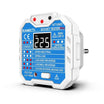
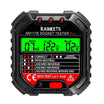
A plug-in outlet tester can quickly show common wiring patterns on a standard receptacle. Some models can also trip a GFCI outlet for a quick functional check.
A multimeter lets you read actual voltage. This is helpful when you want to see whether the voltage is low, missing, or unstable.
Neither tool can prove everything behind the wall is safe. A false ground, damaged wiring, or loose connection may require deeper inspection.
When Should You Stop Testing and Call an Electrician?
You should stop testing when the outlet shows damage, gives abnormal readings, or makes you unsure about what is happening. Electrical problems can become serious even when the outlet still works sometimes.
Call an electrician if you notice:
- Burn marks or melted plastic
- A buzzing sound from the outlet
- A plug that feels loose
- A GFCI outlet that will not reset
- A breaker that keeps tripping
- Voltage that changes sharply under load
- A missing or questionable ground
You should also get help if the outlet is near water and does not have GFCI protection. Local electrical rules can vary, and replacement work should follow the code adopted in your area.
Common Mistakes to Avoid When Testing an Outlet
The most common mistake is using the wrong multimeter setting. A live outlet should be tested with voltage mode, not resistance or continuity mode.
Another serious mistake is leaving the red lead in the current port. If you place the probes across an outlet while the meter is set up for current measurement, you may create a short circuit.
Do not remove the outlet cover for a basic voltage check. For a standard receptacle, the front slots are enough for a simple test.
Do not test a damaged outlet just to “see what happens.” If you see heat damage or sparks, the outlet already needs attention.
Frequently Asked Questions
Can every outlet be tested the same way?
No, every outlet should not be tested the same way. A standard household outlet, a USB outlet, and a 240V appliance outlet have different voltage types and probe points.
Which multimeter setting should I use for a wall outlet?
Use AC voltage mode for a standard household wall outlet. It is usually marked V~ on the multimeter.
Can I use continuity mode on an outlet?
Do not use continuity mode on a live outlet. Continuity mode is only for circuits that are fully powered off.
Can a multimeter prove an outlet is grounded?
A multimeter can give a useful grounding clue, but it cannot fully prove that the grounding system is safe. Some unsafe wiring conditions require further inspection.
What is the safest way to check a GFCI outlet?
Use the TEST and RESET buttons on the GFCI outlet. A multimeter can confirm whether voltage is present, but it should not replace the built-in GFCI test.
Should I test a 240V outlet myself?
Only test a 240V outlet if you understand the outlet type, the expected voltage, and the safety risks. If it powers a large appliance or equipment, calling an electrician is the safer choice.
Why does my outlet show voltage but my device still does not work?
The outlet may fail under load, the plug may be loose, or the device may be faulty. A basic voltage reading does not always prove the outlet can deliver power reliably.
What should I do if the outlet reading is abnormal?
Stop using the outlet until it is checked. Abnormal readings can point to wiring problems, grounding issues, or a failing receptacle.
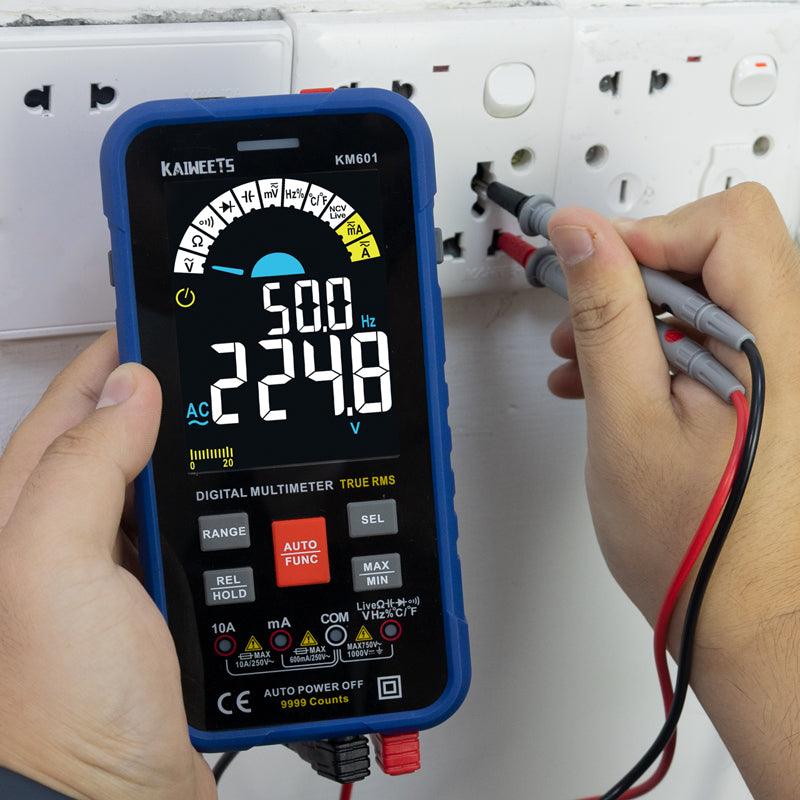

Leave a comment
All comments are moderated before being published.
This site is protected by hCaptcha and the hCaptcha Privacy Policy and Terms of Service apply.