







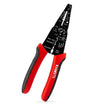
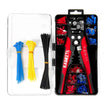
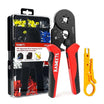
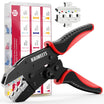

To use a wire stripper, first disconnect the power and verify that the wire is not energized. Match the tool to the wire size, position the wire at the required stripping length, squeeze the handles, and remove the insulation without cutting or nicking the conductor.
The exact technique depends on whether you are using a manual wire stripper or a self-adjusting model. This guide explains both methods, along with common mistakes and ways to check that the stripped wire is ready for a safe connection.
What Is a Wire Stripper Used For?
A wire stripper removes insulation from an electrical wire while leaving the conductor underneath intact. The exposed conductor can then be connected to a terminal, connector, or another wire.
Many wire strippers also include a cutting edge. Multifunction models may add crimping holes or other features, but these functions should only be used within the tool’s specified range.

What Should You Do Before Stripping a Wire?
Before stripping a wire, disconnect it from every source of electrical power and confirm that it is de-energized.
- Turn off the power: Switch off the correct breaker or disconnect the power source.
- Verify the circuit: Use an appropriately rated tester to confirm that voltage is not present.
- Inspect the tool: Do not use a wire stripper with damaged handles, loose parts, or chipped blades.
- Identify the wire: Check whether it is solid or stranded and determine its size.
- Check the connection: Find out how much insulation the terminal or connector requires you to remove.
Do not strip a wire while it is energized. Insulated handles do not make live electrical work safe for an unqualified user.
Which Type of Wire Stripper Are You Using?
The correct operating method depends mainly on whether the tool uses fixed stripping holes or a self-adjusting mechanism.
Manual wire stripper
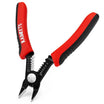
A manual wire stripper has several marked openings for different wire sizes. You place the wire in the matching opening, close the handles, and pull away the cut insulation.
Some tools show separate sizes for solid and stranded wire. Use the marking that matches both the conductor type and its gauge.
Self-adjusting wire stripper
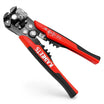
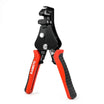
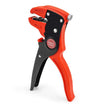
A self-adjusting wire stripper grips the insulation and removes it when the handles are squeezed. It can accommodate a range of wire sizes without requiring a separate stripping hole for each size.
Many models include an adjustable strip-length stop. Some also have a tension control for different insulation materials.
Adjustable wire stripper
An adjustable wire stripper uses a screw or dial to control how deeply the blades close. It is useful when the wire size is not covered by fixed stripping holes.
The adjustment must be tested carefully. If the opening is too small, the blades can damage the conductor. If it is too large, the insulation may not separate cleanly.
How Do You Use a Manual Wire Stripper?
To use a manual wire stripper, select the correct gauge opening and pull the tool straight toward the end of the wire after cutting through the insulation.
Step 1: Confirm the wire is de-energized
Disconnect the power before touching or cutting the wire. Verify the condition with a suitable electrical tester rather than relying only on the position of a switch.
Step 2: Determine the wire size
Look for the wire gauge printed on the cable jacket or product documentation. Common wire strippers use American Wire Gauge markings, shown as AWG.
If the size is unknown, begin with an opening that appears slightly larger. Move to the next smaller opening only if the insulation does not separate.
Step 3: Choose the correct stripping hole
Place the insulated wire in the opening marked for its gauge. Use the solid or stranded designation shown on the tool when separate markings are provided.
Using an opening that is too small can nick a solid conductor or cut individual strands.
Step 4: Position the wire at the correct length
Insert only the section of insulation that needs to be removed. The required strip length should come from the terminal, connector, or equipment instructions.
Avoid guessing the length. Removing too much insulation can leave bare conductor exposed after the connection is completed.
Step 5: Squeeze the handles
Close the handles firmly enough for the blades to cut through the insulation. Do not continue applying excessive force once the tool has closed around the wire.
Step 6: Pull the insulation off
Keep the wire steady and pull the stripper straight toward the cut end. The insulation should slide off without requiring the tool to be twisted repeatedly around the conductor.
Twisting the tool can score the copper and may weaken the wire.
Step 7: Inspect the exposed conductor
Check the bare wire before making the connection. The conductor should be smooth and undamaged.
If a solid conductor is deeply nicked, cut off the damaged section and strip it again. If strands have been cut from stranded wire, repeat the process with a better tool setting.
How Do You Use a Self-Adjusting Wire Stripper?
To use a self-adjusting wire stripper, set the desired strip length, insert one wire into the jaws, and squeeze the handles in one controlled motion.
Step 1: Set the stripping length
Adjust the wire stop so that only the required amount of insulation extends into the stripping mechanism.
If the tool does not have a stop, mark or visually align the required length before squeezing the handles.
Step 2: Insert one wire into the jaws
Place the wire straight between the gripping and stripping sections. The wire should sit flat rather than entering the tool at an angle.
Strip one conductor at a time unless the manufacturer specifically states that the tool supports multiple wires or ribbon cable.
Step 3: Squeeze the handles completely
Close the handles in one smooth motion. One side of the mechanism holds the wire while the other separates and removes the insulation.
Do not rotate the tool around the wire. A self-adjusting stripper is designed to complete the action through the movement of its jaws.
Step 4: Adjust the tool if necessary
If the jaws slip without removing the insulation, increase the gripping or tension setting slightly when the tool provides that control.
If the conductor is being marked or strands are being cut, reduce the tension. Also confirm that the wire falls within the tool’s stated stripping range.
Step 5: Inspect the result
Make sure the insulation has been removed cleanly and the conductor remains undamaged. The stripped section should also match the length required by the connection.
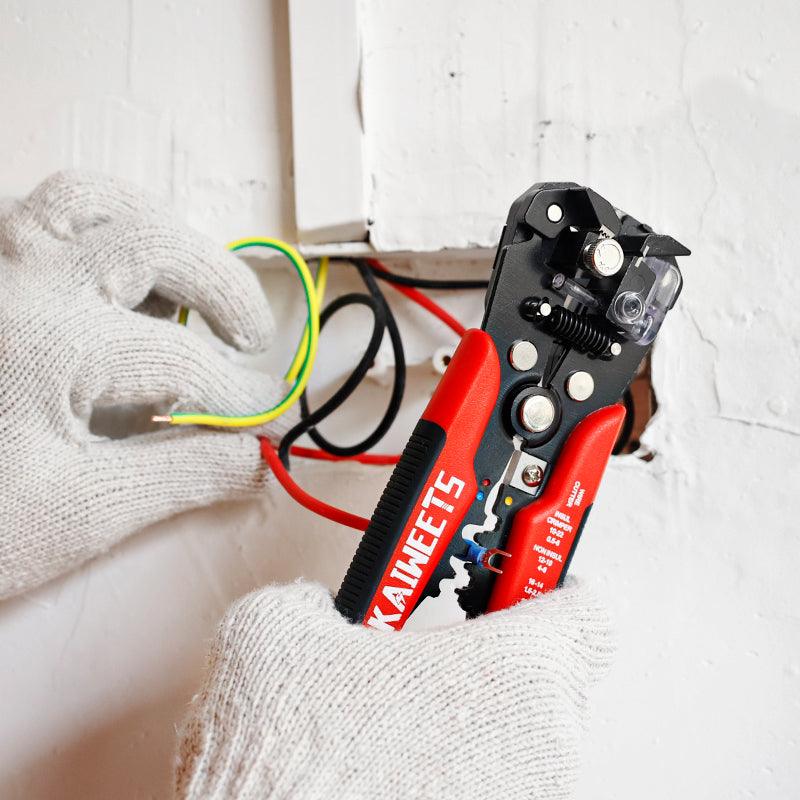
Self-adjusting models such as the KAIWEETS KWS-103 wire stripper may also include a wire cutter and crimping sections. Use each section only for the wire or terminal sizes listed in its specifications.
How Much Insulation Should You Remove?
Remove only enough insulation for the conductor to fit fully inside the terminal or connector. There is no single stripping length that works for every electrical connection.
- Push-in or lever connector: Follow the strip-length marking printed on the connector.
- Crimp terminal: The conductor should enter the metal barrel without bare wire extending outside it.
- Screw terminal: Expose enough conductor for secure contact without leaving excess copper visible.
Many receptacles and connectors include a strip gauge on the housing. Use that guide rather than estimating the length by eye.
How Do You Strip Solid and Stranded Wire?
Solid and stranded conductors require similar steps, but stranded wire usually needs more care because individual strands can be cut easily.
Stripping solid wire
Solid wire contains one metal conductor. Use the exact gauge opening and inspect the surface for rings, grooves, or deep cuts after stripping.
A small nick can create a weak point that may break when the wire is bent or secured under a terminal.
Stripping stranded wire
Stranded wire contains multiple small conductors. Use the stranded-wire marking if the tool provides one.
After stripping, inspect the bundle closely. All strands should remain present and lie together neatly.
Do not remove damaged strands and continue using the wire. Cut the end back and strip it again so the connection retains the full conductor area.
How Can You Tell If a Wire Is Stripped Correctly?
A properly stripped wire has a clean insulation edge, an undamaged conductor, and the correct exposed length for the planned connection.
- No deep cuts or circular scoring appear on a solid conductor.
- No strands are missing from a stranded conductor.
- No pieces of insulation remain on the exposed wire.
- The bare section is long enough to enter the terminal fully.
- No bare copper remains exposed outside the completed connection.

What Are the Most Common Wire-Stripping Mistakes?
Most stripping problems are caused by using the wrong opening, removing too much insulation, or failing to inspect the conductor afterward.
Using the wrong wire-size opening
An opening that is too large may not cut the insulation completely. An opening that is too small can damage the conductor.
Twisting the stripper around the wire
Repeated twisting can score the conductor. Close the tool and pull it straight toward the end unless its manufacturer specifies a different technique.
Removing too much insulation
Excess bare conductor can remain exposed after installation. Measure the required length before making the cut.
Stripping more than one wire at once
Stacking wires in a tool that is designed for one conductor can produce uneven cuts. It may also damage the insulation or conductor.
Using a knife instead of a wire stripper
A utility knife can cut too deeply or slip toward the user. A correctly sized wire stripper provides better control and reduces the chance of damaging the conductor.
Working on an energized wire
A wire stripper is not a voltage-testing tool. Disconnect and verify the circuit before starting, even when the tool has insulated handles.
Why Does My Wire Stripper Cut the Wire?
A wire stripper usually cuts the conductor because the selected opening is too small, the pressure is too high, or the wire is outside the tool’s supported range.
Check the following:
- Confirm the wire gauge and conductor type.
- Use the stranded marking for stranded wire.
- Reduce the tension on a self-adjusting stripper.
- Inspect the blades for damage or misalignment.
- Make sure the wire is inserted straight.
Very soft insulation and fine stranded wire may require a more precise stripping tool. Do not continue using a setting that repeatedly removes conductor material.
Why Won’t My Wire Stripper Remove the Insulation?
A wire stripper may fail to remove insulation when the opening is too large, the blades are dull, or the insulation is unusually hard or slippery.
For a manual stripper, move to the next appropriate opening without going smaller than the conductor size. For a self-adjusting model, increase the tension gradually.
If the tool grips the wire but leaves the insulation attached, check whether the blades are dirty or damaged. Replace worn parts according to the manufacturer’s instructions.
How Do You Maintain a Wire Stripper?
Keep the tool clean and inspect its blades regularly so it can continue removing insulation without damaging the conductor.
- Remove insulation fragments from the jaws after use.
- Wipe the tool dry before storing it.
- Check the spring and pivot for loose or damaged parts.
- Do not use the cutting edge on steel unless it is specifically rated for that material.
- Store the tool with its lock engaged when one is provided.
Do not grind or reshape precision stripping openings. Replace the blade or tool if the cutting surfaces are chipped or badly worn.
You can compare manual and self-adjusting options in the KAIWEETS wire stripper collection.
Frequently Asked Questions
Can you use a wire stripper on a live wire?
No. Disconnect the circuit and verify that voltage is absent before stripping the wire.
Work on or near exposed energized components should only be performed by qualified people using the procedures and protective equipment required for the hazard.
How do you know which wire-stripper hole to use?
Match the marked hole to the wire’s AWG size. Also check whether the marking applies to solid or stranded wire.
If the wire size is unknown, identify it from the cable marking or use an appropriate wire gauge. Do not force the conductor into an opening that appears too small.
Can you strip wire with pliers?
Standard pliers are not designed to control the cutting depth around insulation. They may crush the wire or cut into the conductor.
A dedicated wire stripper is the safer and more reliable option.
Can you strip wire with a utility knife?
A knife can remove some types of cable jacket, but it is easy to cut too deeply or slip. It is not the preferred tool for stripping individual conductors.
Use a wire stripper or cable-stripping tool designed for the wire and insulation type.
Is a self-adjusting wire stripper better?
A self-adjusting wire stripper is faster when stripping many wires of different sizes. It also makes repeated strip lengths easier when it includes an adjustable stop.
A manual stripper may provide more control for delicate wire or occasional work. The better choice depends on the wire type and frequency of use.
Can one wire stripper work on every wire size?
No. Every wire stripper has a specified working range. Very thin conductors and large cables may require different tools.
Always check the supported solid and stranded wire sizes before use.
Should you twist stranded wire after stripping it?
Lightly gathering loose strands can make insertion easier, but do not tightly twist the conductor unless the terminal instructions allow it.
All strands should enter the terminal. None should remain outside the connection or be cut away.
Conclusion
Using a wire stripper correctly begins with disconnecting and verifying the circuit. The tool must then be matched to the wire size and conductor type.
With a manual stripper, select the correct gauge opening and pull the insulation straight off. With a self-adjusting stripper, set the strip length and squeeze the handles in one controlled motion.
Always inspect the conductor before making the connection. Clean insulation removal is important, but protecting the wire from nicks and missing strands is what creates a reliable result.
Dig deeper:

Leave a comment
All comments are moderated before being published.
This site is protected by hCaptcha and the hCaptcha Privacy Policy and Terms of Service apply.