

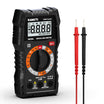
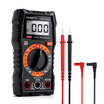
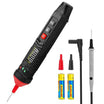
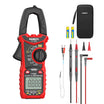
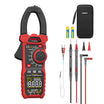
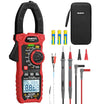
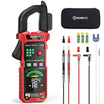
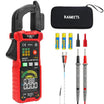

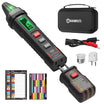
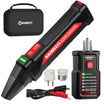
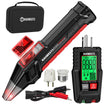
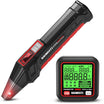
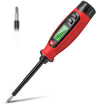
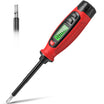
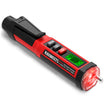
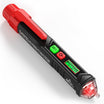
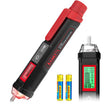
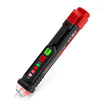
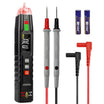
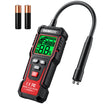
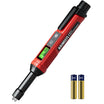


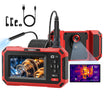
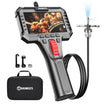
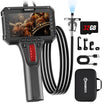
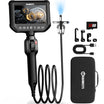





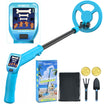
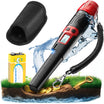
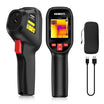
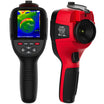
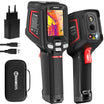
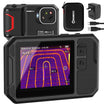
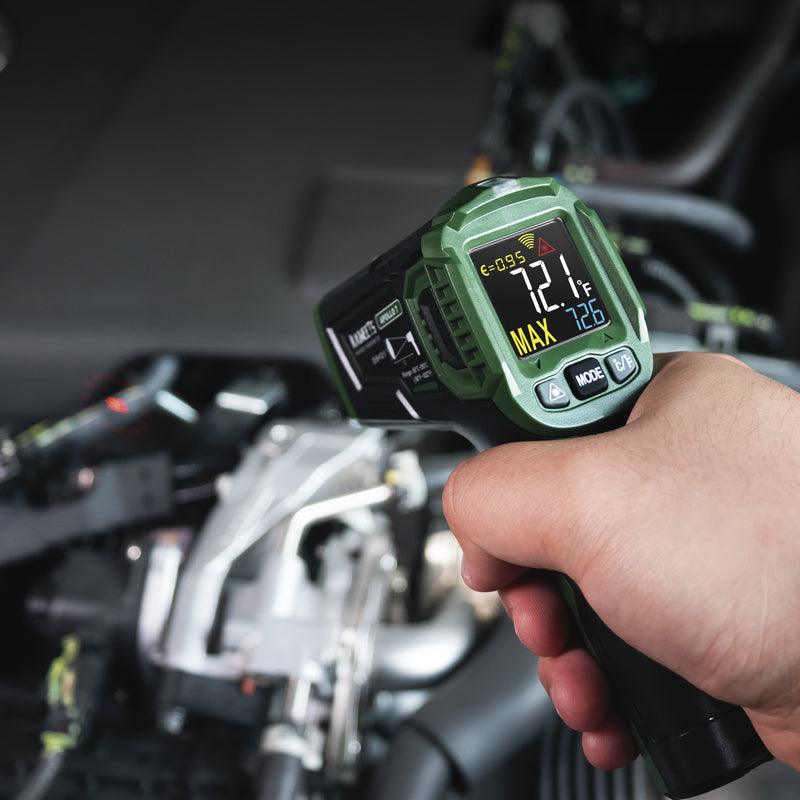
The most reliable way to check a refrigerator’s temperature is to leave an appliance thermometer inside the unit. A refrigerator should remain at 40°F (4°C) or below, while a freezer should stay at 0°F (-18°C) or below. An infrared thermometer can help identify warm surfaces, but it cannot directly measure the air temperature inside a fridge.

What temperature should a refrigerator and freezer be?
A refrigerator should be kept at 40°F (4°C) or below, and a freezer should be kept at 0°F (-18°C) or below. These are the temperature limits recommended by the U.S. Food and Drug Administration for home food storage.
Cold temperatures slow the growth of many harmful bacteria, but they do not make food sterile. Perishable food should still be stored correctly and used within the recommended storage period.
The temperature setting on the control panel may not show the actual temperature inside the appliance. An independent refrigerator thermometer provides a more useful reading because it measures the conditions where the food is stored.
Avoid packing the refrigerator too tightly. Cold air needs room to circulate around the shelves and food containers.
Which thermometer should you use to check a fridge?
A freestanding appliance thermometer is the best tool for monitoring the temperature inside a refrigerator or freezer. It can remain in the appliance and show how the temperature changes over time.
- Refrigerator or freezer thermometer: Best for checking the general temperature inside the appliance.
- Probe thermometer: Useful when you need to check the temperature of a specific food or liquid.
- Infrared thermometer: Useful for quick surface checks, but it does not measure the surrounding air or the internal temperature of food.

A body thermometer is not a suitable replacement. It may have a limited measurement range and is designed for a different type of temperature check.
How do you check refrigerator temperature step by step?
You can check refrigerator temperature by placing an appliance thermometer in the middle of the compartment and leaving the door closed for several hours.

- Place a refrigerator thermometer in the middle of the main compartment. Keep it away from the door and direct airflow from a cooling vent.
- Close the refrigerator door and wait 5 to 8 hours. Leaving the thermometer overnight can provide a more stable reading.
- Open the door and read the thermometer promptly so warm room air has less time to affect the result.
- If the reading is above 40°F (4°C), move the temperature control one setting colder.
- Wait another 5 to 8 hours before checking again. Continue making small adjustments until the refrigerator remains at or below 40°F.
For a freezer, place the thermometer between frozen food packages. Wait 5 to 8 hours before checking whether the temperature is at or below 0°F (-18°C).
Do not judge the refrigerator from a reading taken immediately after the door has been open. Loading groceries or changing the temperature setting can also cause a temporary change.
Can an infrared thermometer check fridge temperature?
An infrared thermometer cannot directly measure the air temperature inside a refrigerator. It detects infrared energy from a surface and converts that energy into a surface-temperature reading.
This means that pointing an infrared thermometer at the refrigerator door or an empty shelf does not show the overall storage temperature. The surface may be warmer or colder than the air around the food.
How should you use an infrared thermometer inside a fridge?
An infrared thermometer is most useful as a quick way to compare surface temperatures in different parts of the refrigerator.
- Aim at a matte food container or a bottle of water that has been inside the refrigerator for several hours.
- Hold the thermometer close enough for the measured spot to fit completely on the target.
- Compare readings from the middle shelf and the door area to identify possible warm zones.
- Avoid measuring shiny metal because reflective surfaces may produce an inaccurate result.
- Wipe away frost or condensation before taking a surface reading.
A sudden move from a warm room into a cold refrigerator may temporarily affect some infrared thermometers. Follow the stabilization time in the device manual before relying on the result.
The laser on an infrared thermometer is only an aiming aid. It does not measure temperature. Never point the laser toward a person’s eyes or at an animal.
Use an appliance thermometer when you need to confirm that the refrigerator is safe for food storage. Treat an infrared reading as a surface check rather than a replacement for continuous monitoring.
Why do refrigerator temperature readings change?
Refrigerator temperature changes because the cooling system cycles on and off, while door openings allow warm air to enter. Different areas of the compartment may also receive different amounts of cold airflow.
How does a refrigerator produce cold air?
A refrigerator does not create cold energy. It uses refrigerant to move heat from inside the appliance to the surrounding room.
- Evaporator: The refrigerant absorbs heat from inside the refrigerator as it evaporates.
- Compressor: The compressor increases the pressure of the refrigerant and moves it through the system.
- Condenser: The condenser releases heat outside the appliance before the refrigerant begins another cycle.
Because this process runs in cycles, a single reading may be slightly higher or lower than the refrigerator’s longer-term average.
What should you do if the fridge is warmer than 40°F?
First, confirm the reading with an appliance thermometer after the refrigerator has remained closed for 5 to 8 hours.
- Make sure the door closes fully and inspect the door seal for gaps.
- Move food away from blocked air vents and leave space for circulation.
- Adjust the control one setting colder and check again after several hours.
- Clean accessible condenser coils according to the appliance manual.
- Arrange professional service if the temperature remains above 40°F.
If perishable food may have remained above 40°F for more than two hours, do not rely on its smell or appearance. Follow current food-safety guidance when deciding whether it should be discarded.
What should you do if food is freezing in the refrigerator?
Move the affected food away from the back wall or a direct cooling vent. Adjust the temperature control one setting warmer, then wait several hours before checking again.
Frequently asked questions
1. How often should I check my refrigerator temperature?
Keep an appliance thermometer inside the refrigerator and check it regularly. Check it again after changing the temperature setting or loading a large amount of food. It is also important to check after a power outage.
2. Is 42°F safe for a refrigerator?
A refrigerator should not remain at 42°F. The recommended maximum is 40°F (4°C). A brief rise after opening the door does not necessarily mean the stored food is unsafe, but a continued reading above 40°F requires attention.
3. Where should a refrigerator thermometer be placed?
Place it near the middle of the main compartment, where it can represent the general storage temperature. Do not place it directly against the back wall or beside an air vent.
4. Why does the refrigerator display differ from my thermometer?
The refrigerator display may show the selected setting rather than the exact temperature at every shelf. The built-in sensor may also be located in a colder part of the appliance. Compare readings over several hours instead of relying on one measurement.
5. Can I measure refrigerator air with an infrared thermometer?
No. An infrared thermometer measures the temperature of a surface within its field of view. Use a refrigerator thermometer or a suitable air-temperature probe to measure conditions inside the compartment.
Conclusion
A freestanding appliance thermometer is the simplest and most dependable way to check refrigerator temperature. Place it in the middle of the compartment and wait 5 to 8 hours before evaluating the result.
An infrared thermometer can help locate warmer surfaces, but it should not be used as the only food-safety check. Keep the refrigerator at 40°F (4°C) or below and the freezer at 0°F (-18°C) or below.
Reference guidance: FDA refrigerator thermometer guidance, USDA appliance thermometer guidance

1 comment
Eloise Meier
To the kaiweets.com webmaster, You always provide clear explanations and step-by-step instructions.
Leave a comment
All comments are moderated before being published.
This site is protected by hCaptcha and the hCaptcha Privacy Policy and Terms of Service apply.