


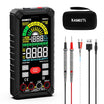

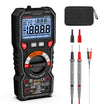
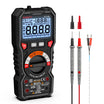
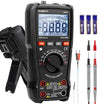

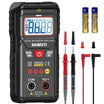
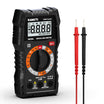
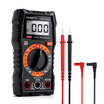
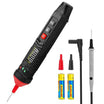
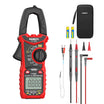
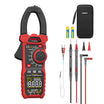
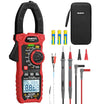

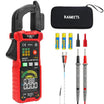
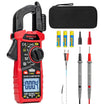














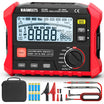



































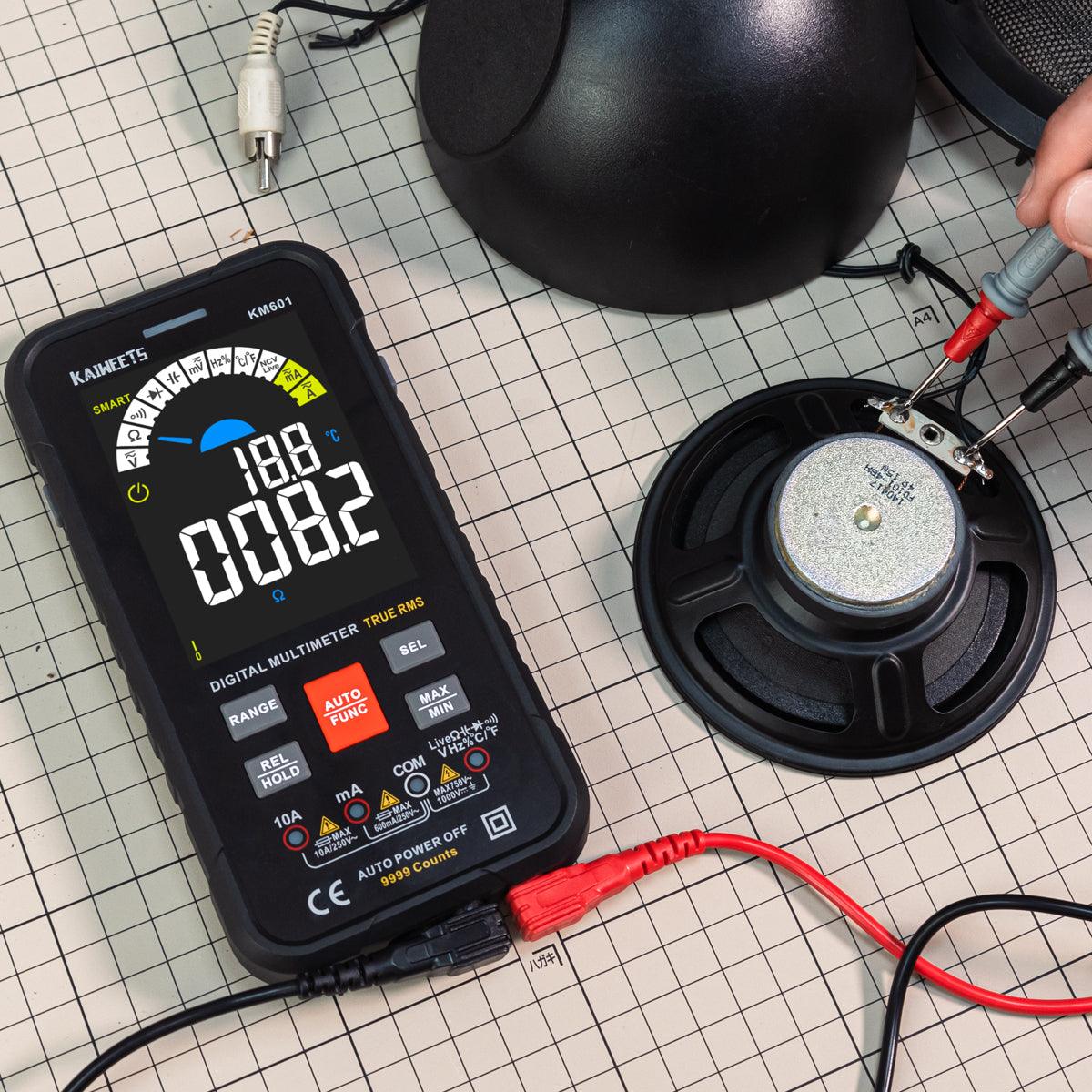
A subwoofer is a speaker designed to reproduce low-frequency sound. When it stops producing clean bass, a multimeter can help you check whether the voice coil has an open circuit or an electrical short.
A standard multimeter does not measure the subwoofer’s complete impedance response. It measures DC resistance at the speaker terminals. This is still a useful first test because it can reveal several common voice-coil faults.
If you are new to electrical testing, review how to use a multimeter before starting. Always disconnect the subwoofer from its amplifier and power source before measuring resistance.
How can you tell if a subwoofer is blown?
A blown subwoofer may produce distorted bass, mechanical rattling, or no sound at all. The problem may be electrical, but it can also involve the cone or suspension.
Common warning signs include:
- No sound even though the amplifier and wiring are working
- Buzzing, scraping, or rattling during bass notes
- A torn surround or visibly damaged cone
- A burnt smell or discoloration near the voice coil
- A cone that feels stuck when pressed gently and evenly
Stop using the subwoofer if you notice burning, melting, or severe mechanical damage. Continued use may damage the amplifier or make the speaker harder to repair.
How do you test a subwoofer with a multimeter?

You test a subwoofer by isolating its voice coil and measuring resistance across the positive and negative terminals. The measurement should be stable and reasonably close to the manufacturer’s DC resistance specification.
Important: Do not perform this test while the subwoofer is connected to an amplifier. For a powered subwoofer, unplug the AC power cord. If the driver terminals cannot be reached without exposing the internal power supply, have the unit checked by a qualified technician.
- Disconnect the subwoofer. Remove the speaker wires from the amplifier. If the driver is connected to an internal crossover or amplifier plate, disconnect at least one voice-coil lead before taking the measurement. Other components can affect the result.
- Inspect the driver and wiring. Look for a torn surround or a loose terminal. Check the flexible wires running from the terminals toward the cone for visible damage.
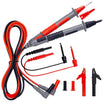
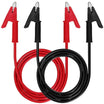
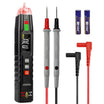
- Connect the multimeter leads correctly. Insert the black lead into the COM jack. Insert the red lead into the jack marked VΩ. Do not use the current-input jack.
- Select resistance mode. Turn the dial to the ohms symbol, Ω. An auto-ranging meter will select the range automatically. On a manual-ranging meter, choose a low resistance range that can display the expected value. The multimeter symbols guide explains the common dial markings if you are unsure which setting to use.
- Check the test-lead resistance. Touch the two probe tips together and note the reading. A small value is normal because the leads have their own resistance. Subtract this value from the speaker measurement when greater accuracy is needed.
- Measure the voice coil. Touch one probe to each subwoofer terminal. Polarity does not affect a resistance measurement, although using red on positive and black on negative can make the process easier to follow.
- Wait for a stable reading. Keep the probes firmly against clean metal. Compare the result with the DC resistance listed in the driver’s manual or datasheet.
How should you interpret the resistance reading?
The reading indicates whether the voice coil has a continuous electrical path. It does not confirm that the subwoofer will perform correctly under an audio signal.
- A stable resistance reading: The voice coil is electrically continuous. Its DC resistance will normally be lower than the subwoofer’s nominal impedance rating.
- OL or an infinite reading: The circuit is open. This can be caused by a broken voice coil, damaged flexible lead, or disconnected terminal.
- A reading close to 0 Ω: The voice coil may be shorted. First subtract the test-lead resistance and confirm that the driver is isolated from other components.
- A reading that jumps or disappears: There may be an intermittent connection. Check the terminals and flexible leads before assuming the voice coil has failed.
A subwoofer labeled 4 Ω should not be expected to measure exactly 4 Ω on a multimeter. The label is a nominal impedance rating for an AC audio signal, while the meter applies a small DC test current. Use the manufacturer’s DC resistance specification whenever it is available.
For a dual-voice-coil subwoofer, test each coil separately. Remove any series or parallel jumpers first so that one coil does not change the reading of the other.
What if the resistance reading looks normal?
A normal resistance reading only shows that the voice coil is not completely open or obviously shorted. Mechanical damage and system problems can still cause weak or distorted bass.
With the subwoofer disconnected, place your fingertips evenly around the cone and press it inward very gently. The movement should feel smooth. Scraping can indicate that the voice coil is rubbing inside the magnetic gap.
Next, inspect the surround and cone. A loose joint can create rattling even when the electrical reading is normal. Also check the speaker cable and amplifier settings before replacing the driver.
After reconnecting the system, play familiar bass-heavy audio at a low volume. Gradually raise the level while listening for distortion. Stop the test if the cone moves excessively or produces a harsh mechanical sound.

Frequently asked questions
A multimeter is useful for checking voice-coil continuity, but it cannot diagnose every subwoofer problem.
Can a multimeter measure speaker impedance?
A standard multimeter cannot measure the complete speaker impedance curve. It measures DC resistance, while speaker impedance changes with the frequency of the audio signal.
Measuring true impedance requires equipment that sends a controlled AC signal through the driver. An impedance analyzer or a loudspeaker measurement system can plot how the impedance changes across different frequencies.
Can I test a powered subwoofer through its RCA input?
No. The RCA input connects to the subwoofer’s amplifier rather than directly to the speaker voice coil. A resistance measurement must be taken across the isolated driver terminals.
Do not place a multimeter in resistance mode across an energized input or amplifier output. Resistance testing must be performed with the equipment disconnected from power.
Does a normal resistance reading mean the subwoofer is good?
No. A normal reading shows that the voice coil has electrical continuity, but the cone may still be damaged. The coil can also rub only when it moves under load.
Use the resistance test together with a visual inspection and a low-volume listening test. Professional acoustic testing may be needed when the fault only appears at certain frequencies.
Do I have to remove the subwoofer from its enclosure?
Not always. You can test a passive subwoofer at its external terminals when no crossover or other driver is connected across the same circuit.
For a more reliable result, measure directly at the driver terminals with at least one lead disconnected. Do not open a powered enclosure if doing so would expose mains-voltage components.
Conclusion
Testing a subwoofer with a multimeter is a practical way to check the electrical condition of its voice coil. Disconnect the driver, select resistance mode, and compare the stable reading with the manufacturer’s specification.
An open or near-zero reading usually points to an electrical fault. A normal reading means the voice coil is continuous, but it does not rule out mechanical damage or an amplifier problem. Combine the multimeter result with a careful inspection before deciding whether the subwoofer needs repair or replacement.
Dig deeper:



Commenta
Nota che i commenti devono essere approvati prima di essere pubblicati.
Questo sito è protetto da hCaptcha e applica le Norme sulla privacy e i Termini di servizio di hCaptcha.