

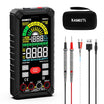
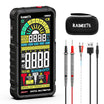
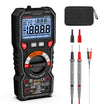
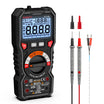
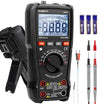

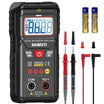
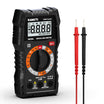
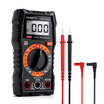
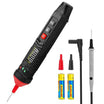
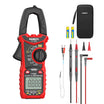
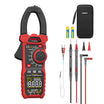
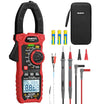
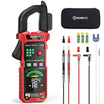
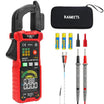
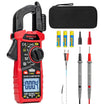
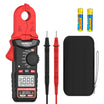
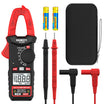




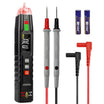


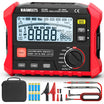
















Digital multimeters are used to measure voltage, current, resistance, and other electrical values. For reliable results, the meter must be accurate enough for the job, and the user must understand what the reading actually means.
What do accuracy and precision mean on a digital multimeter?
Accuracy tells you how close the reading is to the true value, while precision tells you how consistently the meter repeats the same reading.
| Term | What it means | Why it matters |
|---|---|---|
| Accuracy | How close the reading is to the actual value. | It helps you decide whether you can trust the number on the screen. |
| Precision | How repeatable the reading is under the same conditions. | It helps you see whether the meter gives stable results. |
| Resolution | The smallest change the display can show. | It affects how much detail you can see, but it is not the same as accuracy. |
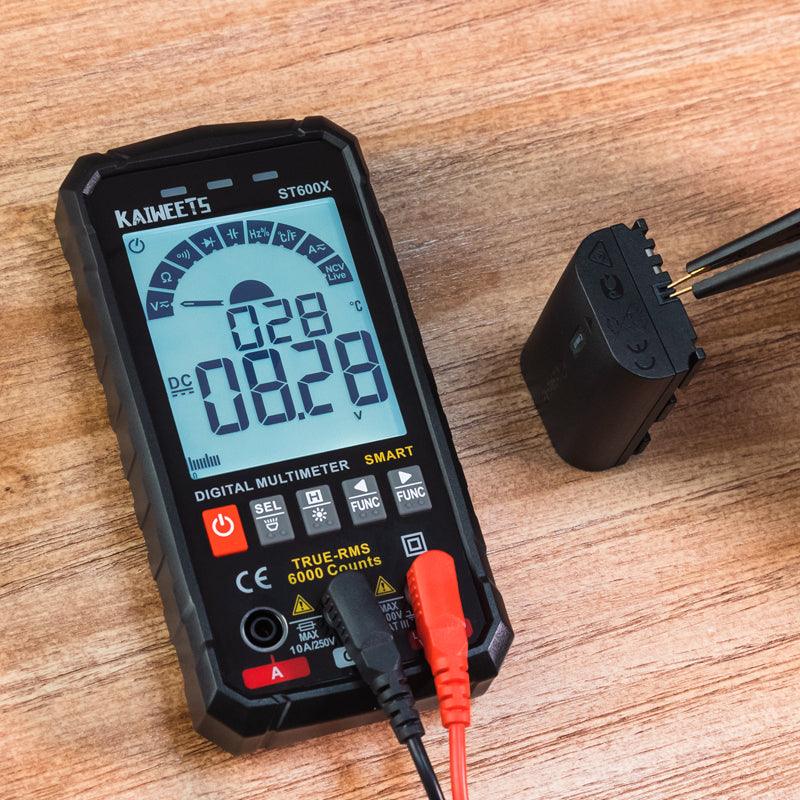
For example, a meter may display 12.01 V instead of 12.0 V. That extra digit shows better resolution, but it does not automatically mean the reading is more accurate. The accuracy specification is what tells you the expected measurement error.

How accurate is a digital multimeter?
A digital multimeter does not have one fixed accuracy level for every measurement. Accuracy depends on the function, range, temperature, and the specification printed in the user manual.
Most multimeter specifications are written in a format similar to this:
±(0.5% of reading + 2 digits)
This means the possible error includes two parts. The first part is a percentage of the measured value. The second part is based on the last digits shown on the display.
For basic home or electronics troubleshooting, a general-purpose meter is often accurate enough. For professional calibration work, product testing, or sensitive electronics repair, you may need a meter with tighter accuracy specifications and a valid calibration certificate.
What affects multimeter accuracy?
Several conditions can affect the accuracy of a digital multimeter. The meter itself matters, but the setup matters too.
- Function and range: Voltage, current, and resistance modes usually have different accuracy specifications.
- Calibration condition: A meter can drift over time, especially if it is used often or stored in harsh conditions.
- Temperature: Many specifications assume the meter is used within a stated temperature range.
- Test leads: Damaged or loose leads can create unstable readings.
- Measurement method: A poor probe connection can make a good meter look inaccurate.
Low battery power can also cause problems on some meters. If readings suddenly become unstable, replace the battery before assuming the circuit has changed.
How do you check the accuracy of a multimeter?
You can do a rough check at home, but a true accuracy test requires comparison against a known traceable reference.
Use a known reference for a basic check
A fresh household battery can help you see whether the meter is reading in a reasonable range. This is only a quick sanity check because the actual battery voltage changes with age, load, and chemistry.
A resistor with a known tolerance can also be useful. For example, if you measure a 1% resistor, the reading should fall close to its stated value. Remember that the resistor’s own tolerance must be considered.
Use a calibration service for reliable verification
For professional work, the better method is calibration. A calibration lab compares the multimeter against reference standards and records the measurement uncertainty.
If you need documented proof of accuracy, choose a calibration service that provides a certificate. This is especially important for quality control, audits, and regulated testing environments.
What is a digital multimeter used for?
A digital multimeter is used to measure common electrical values and troubleshoot basic circuit problems.
Measuring voltage
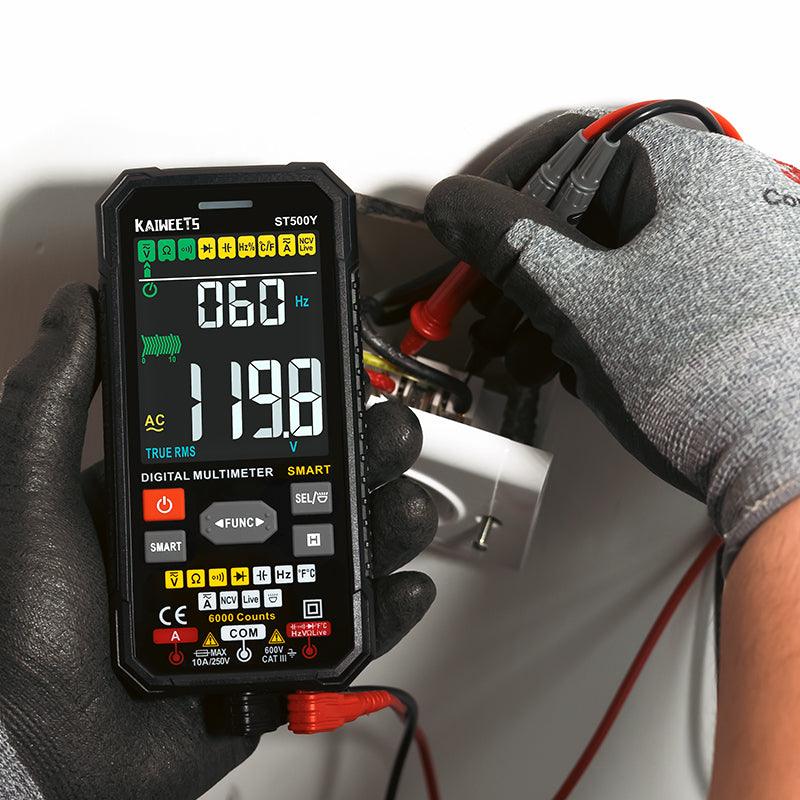
Voltage mode is used to check the electrical potential between two points. It is commonly used for batteries, adapters, outlets, and circuit boards.
Measuring current
Current mode measures how much electrical current flows through a circuit. This test usually requires the meter to be connected in series, so it must be done carefully.
Never place the probes across a power source while the meter is set to current mode. This can blow the fuse inside the meter and may create a safety hazard.
Measuring resistance and continuity
Resistance mode is used when the circuit is powered off. It helps check components, wires, and connections.
Continuity mode is a quick way to check whether two points are electrically connected. Many meters beep when the connection has very low resistance.
How do you choose a digital multimeter for reliable measurements?
The best digital multimeter is not always the one with the most features. It should match the type of work you plan to do.
Start with the measurement functions you actually need. For general troubleshooting, voltage, resistance, continuity, and current are usually the core functions. For more advanced work, you may want features such as capacitance, frequency, temperature, or data recording.
Next, check the accuracy specifications. Do not rely only on the number of display digits. A meter with more digits can still have a wider measurement error than a better-specified model.
Safety rating is also important. If you plan to measure mains voltage, choose a meter with the correct CAT rating for the environment. The test leads should have a matching rating and should be in good condition.
Digital multimeters can be purchased at electronics stores or online from KAIWEETS. Before buying, compare the specifications instead of choosing only by price.

Common mistakes that lead to unreliable readings
Many inaccurate readings come from setup mistakes rather than a defective meter. If the icons on the dial are confusing, a quick review of common multimeter symbols can help you avoid selecting the wrong function.
- Using the wrong mode for the measurement.
- Testing resistance on a powered circuit.
- Using damaged test leads.
- Measuring current in parallel with a power source.
- Ignoring the meter’s accuracy specification.
If a reading does not make sense, stop and check the dial setting, lead ports, and probe contact. A simple setup error can change the result completely.
Frequently Asked Questions
Why is a digital multimeter usually easier to read than an analog multimeter?
A digital multimeter shows the reading directly on the display, so there is no needle position to interpret. This helps reduce reading errors, especially for beginners.
Digital meters may also include auto-ranging, hold functions, and other features that make routine measurements easier. However, accuracy still depends on the meter’s specifications and condition.
Is accuracy the same as resolution?
No. Resolution is the smallest change the display can show. Accuracy is how close the reading is to the true value.
A meter can show many digits and still have a larger measurement error than expected. Always check the accuracy specification, not just the display count.
Can I test multimeter accuracy with a 9V battery?
A 9V battery can only provide a rough check. It can show whether the meter is reading in a believable range, but it cannot prove the meter is accurate.
Battery voltage changes as the battery discharges. For a real accuracy check, use a known reference or a professional calibration service.
How often should a digital multimeter be calibrated?
Calibration frequency depends on how the meter is used. A meter used for professional testing may need scheduled calibration, while a hobby meter may only need occasional checking.
If the meter is dropped, exposed to harsh conditions, or used for critical work, calibration should be considered sooner.
What affects multimeter accuracy the most?
The biggest factors are the meter’s design, calibration condition, selected range, test leads, and measurement setup.
Environmental conditions can also matter. If the meter is used outside its specified temperature range, the reading may not meet the stated accuracy.
Are inexpensive digital multimeters accurate enough?
Many inexpensive meters are accurate enough for simple home and hobby use. They can check batteries, continuity, and basic voltage safely when used within their ratings.
For professional work, choose a meter with clear specifications, proper safety ratings, and calibration support.
Conclusion
Accuracy, precision, and resolution all affect how you interpret a digital multimeter reading. Accuracy tells you how close the reading is to the true value. Precision tells you whether the reading is repeatable. Resolution tells you how much detail the display can show.
For reliable measurements, read the specifications, use the correct mode, keep the test leads in good condition, and calibrate the meter when the work requires documented accuracy.
Dig deeper:

Dejar un comentario
Todos los comentarios se revisan antes de su publicación.
Este sitio está protegido por hCaptcha y se aplican la Política de privacidad de hCaptcha y los Términos del servicio.