

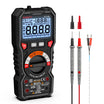
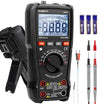

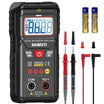
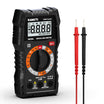
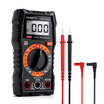
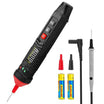
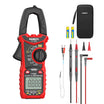
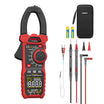
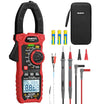
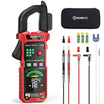
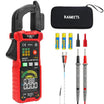
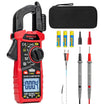
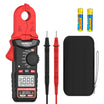
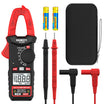



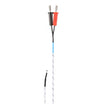
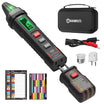
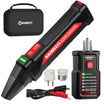
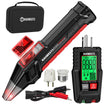
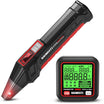
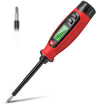
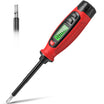
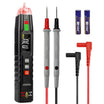


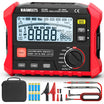
















If your watch has stopped, the battery is usually the first thing to check. A digital multimeter can help you confirm whether the battery still has usable voltage before you replace it or assume the watch movement is damaged.
The test is simple, but the result should be read carefully. A multimeter measures open-circuit voltage. That means a weak battery may still show a normal-looking number when it is not powering the watch.
What type of battery is usually inside a watch?
Most quartz watches use a small button or coin cell, and the exact code on the old battery matters more than the battery’s size alone.
Older articles often describe watch batteries as lithium-ion, NiCd, or NiMH batteries. That is not accurate for most standard quartz watches. Rechargeable lithium batteries are common in smartwatches, but they are not usually replaced or tested the same way as a removable button cell.
| Battery type | Common code | Typical voltage | Where you may see it |
|---|---|---|---|
| Silver oxide | SR, 3-digit codes such as 377 or 364 | About 1.55V | Many quartz wristwatches |
| Alkaline button cell | LR or AG codes | About 1.5V | Lower-cost watches and small electronics |
| Lithium coin cell | CR or BR codes | About 3V | Some watches and compact electronic devices |
| Rechargeable lithium battery | Model-specific pack | Varies by device | Smartwatches and fitness watches |
Before buying a replacement, read the code printed on the old battery. If the code is hard to see, check the watch manual or ask a watch repair shop. A battery with the same diameter may still have the wrong height, chemistry, or voltage.
What should you check before testing a watch battery?
Before testing, make sure the battery is safe to handle and the watch is suitable for DIY battery access.
Do not test a battery that is swollen, leaking, rusty, or unusually hot. Put it aside safely and recycle it according to local battery rules. Button and coin batteries are also a serious swallowing hazard, so keep loose cells away from children and pets. If a battery may have been swallowed, seek medical help immediately or contact Poison Control.
If the watch is water-resistant, opening the case can affect the seal. For a dive watch or a watch you regularly wear in water, a professional replacement is safer because the gasket may need inspection or pressure testing.
How do you test a watch battery with a multimeter?
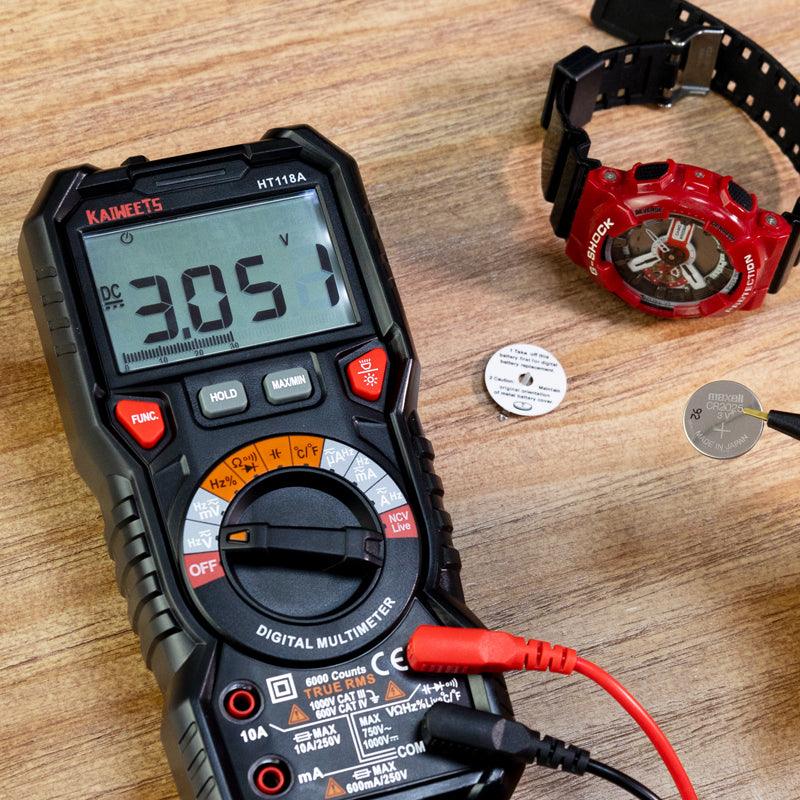
To test a watch battery with a multimeter, set the meter to DC voltage, touch the red probe to the positive side, and touch the black probe to the negative side. This follows the same basic method used in most small-voltage checks, so if you already know how to use a multimeter, the watch battery test should feel straightforward.
- Remove the battery carefully. Work on a clean, dry surface. Avoid touching both sides of the battery with metal tweezers because that can short the cell.
- Find the positive and negative sides. The flat side with the printed code is usually the positive side. The opposite side is usually negative.
- Set the multimeter to DC voltage. Choose V⎓, DCV, or a similar DC voltage symbol. These multimeter symbols can look slightly different by model. If your meter is not auto-ranging, choose a range higher than the battery’s rated voltage.
- Place the probes on the battery. Touch the red probe to the positive side and the black probe to the negative side. Use light pressure so the battery does not slide.
- Read the display. Compare the reading with the expected voltage for that battery type.

How should you read the voltage result?
The reading should be close to the battery’s rated voltage, but the exact pass-or-fail point depends on the watch movement.
| Battery type | Rated voltage | What the reading usually means |
|---|---|---|
| Silver oxide watch battery | About 1.55V | A reading close to 1.55V is usually healthy. A much lower or unstable reading usually means the battery should be replaced. |
| Alkaline button cell | About 1.5V | A reading close to 1.5V is normal. A low reading may cause the watch to stop or run poorly. |
| Lithium coin cell | About 3V | A reading near 3V is expected. A clearly lower reading may fail when the device draws current. |
| 0V or no stable reading | Not normal | Retest the probe contact. If the reading stays at 0V, replace and recycle the battery. |
If the reading looks normal but the watch still does not run, the battery may be weak under load. The issue may also be inside the watch, not the battery.
Can a multimeter fully prove that a watch battery is good?
A multimeter can quickly check voltage, but it cannot fully prove that a watch battery still has enough capacity under load.
This is why a battery can read close to its rated voltage and still fail in the watch. Small cells can drop voltage when the movement starts drawing current. A dedicated battery tester or a watch repair shop can test the cell under a more realistic load.
For a simple home check, the multimeter test is still useful. It can help you spot a dead battery, a wrong-voltage replacement, or a battery that is clearly below its rated voltage.
What if the battery reads good but the watch still does not work?
If the battery voltage looks normal, the problem may be with the installation, contacts, or watch movement.
- The battery may be installed upside down. Check the polarity before closing the case.
- The contacts may be dirty or bent. Poor contact can stop the watch even when the battery is good.
- The replacement battery may be the wrong type. Match the printed code, not just the size.
- The watch may need a reset. Some quartz movements have an AC reset point after battery replacement.
- The movement may need service. Moisture, corrosion, or impact damage can stop the watch.
Do not force the case back closed if the battery does not sit correctly. A battery that is too thick can damage the movement or case back.
How can you extend the life of your watch battery?
You can extend watch battery life by using the correct replacement battery and protecting the watch from conditions that make the movement work harder.
- Use the exact battery code recommended for the watch. A close-looking substitute is not always safe or reliable.
- Store unused batteries in their packaging. Loose batteries can short if they touch metal objects.
- Keep the watch away from high heat. Heat can shorten battery life and damage seals.
- Protect the watch from moisture. Water inside the case can corrode the battery contacts.
- Have water-resistant watches sealed properly. A gasket check is important after opening the case.
Some watches allow you to pull the crown out to stop the hands during storage. This may reduce power use on certain analog quartz watches, but it is not a universal rule. Check the watch manual before relying on it.
Frequently Asked Questions
How much voltage does a watch battery have?
A watch battery is usually about 1.5V, 1.55V, or 3V, depending on the battery type. Silver oxide watch batteries are commonly about 1.55V. Alkaline button cells are about 1.5V. Lithium coin cells are usually about 3V.
What is the most common type of watch battery?
Silver oxide button cells are very common in quartz wristwatches because they provide stable voltage in a small size. Alkaline button cells are also used in some lower-cost watches. Smartwatches usually use rechargeable batteries instead of simple replaceable button cells.
Can I replace a watch battery with the same size but a different code?
You should not choose a replacement by size alone. The code helps identify the battery’s voltage, chemistry, height, and equivalent models. Using the wrong battery can cause poor contact or damage the watch movement.
Is 0V always a bad watch battery?
A 0V reading usually means the battery is dead, but first make sure the probes are touching the correct sides firmly. If the display still shows 0V or jumps around, replace the battery and recycle the old one safely.
Should I open a water-resistant watch myself?
If water resistance matters, it is better to have the battery replaced by a qualified watch technician. Opening the case can disturb the gasket, and the watch may need resealing or pressure testing before it is worn in water again.
Conclusion
Testing a watch battery with a digital multimeter is a quick way to check whether the cell still has usable voltage. Set the meter to DC voltage, touch the probes to the correct sides of the battery, and compare the reading with the battery’s rated voltage.
Just remember that voltage is only one part of the diagnosis. If the battery reads normally but the watch still does not run, check the battery code, contacts, and installation. For water-resistant watches or valuable watches, professional service is usually the safer choice.


Dejar un comentario
Todos los comentarios se revisan antes de su publicación.
Este sitio está protegido por hCaptcha y se aplican la Política de privacidad de hCaptcha y los Términos del servicio.