

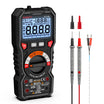
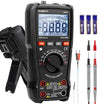

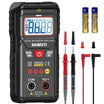
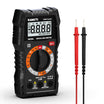
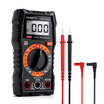
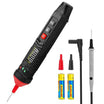
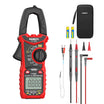
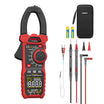
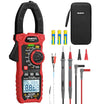
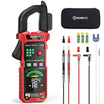
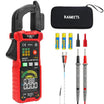
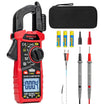



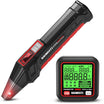
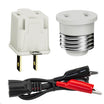
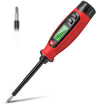
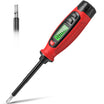
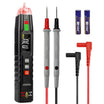

















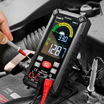
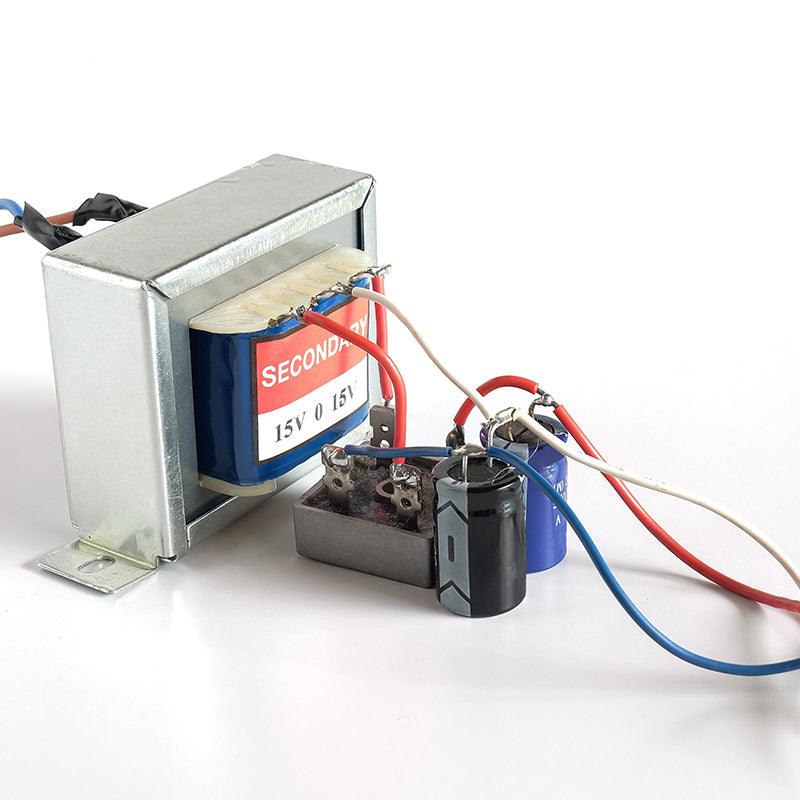
To test an AC capacitor with a multimeter, disconnect the equipment from every power source and verify that it is de-energized. Safely discharge the capacitor, then isolate it from the circuit. Measure its capacitance and compare the result with the microfarad (µF) rating and tolerance printed on the case. A digital multimeter with a capacitance function can identify a capacitor that has drifted out of range. It cannot confirm every fault that appears only under load.
Safety warning: A capacitor can retain hazardous energy after the power is removed. Testing a capacitor inside mains-powered HVAC equipment or an appliance should be left to a qualified technician unless you have the required electrical training. Do not touch exposed terminals. Do not short them with a screwdriver.
Can you safely test an AC capacitor yourself?
You should test an AC capacitor yourself only when you can fully isolate the equipment and follow its service procedure. Turning off a thermostat or control switch may not remove line voltage. Use the specified disconnecting method, then verify the circuit is de-energized with suitable test equipment.
Do not continue if the capacitor is swollen or leaking oil. Replace it according to the equipment manufacturer's instructions. Call a qualified technician when the capacitor is hard-wired into HVAC equipment or another mains-powered system.
What do you need to test an AC capacitor?
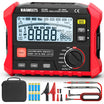
You need a digital multimeter with a capacitance function and a measurement range that covers the value printed on the capacitor. The capacitance setting is usually marked with a dedicated icon, although its appearance and dial position vary by model. The multimeter symbols around the dial will help you confirm whether the required mode is available.
- A digital multimeter with a capacitance function
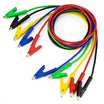
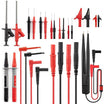
- Insulated test leads in good condition
- A purpose-built capacitor discharge tool or the discharge method specified by the manufacturer
- The equipment service manual or wiring diagram
- Protective equipment appropriate to the electrical hazard
Check the meter manual before starting. The maximum capacitance range must be higher than the value printed on the capacitor. If you are not familiar with the input jacks, test leads, or basic measurement settings, review our guide on how to use a multimeter before continuing.
How do you test an AC capacitor with a multimeter?
To test an AC capacitor accurately, make it safe first and measure it outside the active circuit. The following process applies to common motor-run capacitors. Always follow the equipment manufacturer's service instructions when they differ.
Step 1: Read the capacitor label
The label tells you the value that the multimeter reading must be compared with. Record the capacitance in µF or MFD. Also note the tolerance and rated AC voltage.
A single capacitor usually has one capacitance value. A dual-run HVAC capacitor has two values because it supports two motor circuits.
Step 2: Disconnect the equipment from power
The capacitor must not be connected to an energized circuit during an out-of-circuit capacitance test. Use the equipment disconnect or breaker specified in the service instructions. Prevent the power from being restored while work is in progress.
Use an appropriate voltage function to verify that the exposed circuit is de-energized. Do not rely only on the position of a switch.
Step 3: Discharge the capacitor safely
The capacitor must be discharged before its terminals or wiring are handled. Use a purpose-built discharge tool or a resistor method approved for the equipment. The correct resistor value and contact time depend on the stored energy.
After discharging, check across the terminals and confirm that no measurable voltage remains. Treat the capacitor as energized until this check is complete.
Step 4: Isolate the capacitor from the circuit
An in-circuit reading can be affected by other components. Photograph the wiring and label each lead before disconnecting it. Isolate the capacitor completely when the service procedure allows.
Keep disconnected wires away from bare terminals. Do not allow them to touch the cabinet or each other.
Step 5: Set the multimeter to capacitance mode
Turn the dial to the capacitance symbol and select the correct function if the dial position is shared. Insert the black lead into COM. Insert the red lead into the input specified by the meter manual.
Touch one probe to each capacitor terminal. Keep the probes connected until the reading stabilizes. This may take several seconds because the meter charges the capacitor with a small known current to calculate its capacitance.
If the capacitor has no positive or negative marking, probe orientation does not affect the capacitance reading. Follow the marked polarity when testing a polarized capacitor.
Step 6: Test both sections of a dual-run capacitor
A dual-run capacitor must be checked as two separate capacitance sections. Its terminals are normally marked as follows:
- C: common terminal
- FAN: fan-motor section
- HERM: compressor section
Measure from C to FAN and compare that result with the smaller µF value. Then measure from C to HERM and compare it with the larger value.
Step 7: Compare the reading with the printed tolerance
The capacitor passes the capacitance check only when the measured value falls within the tolerance printed on its label. Many HVAC run capacitors are marked ±5% or ±6%, but the capacitor label is the controlling specification.
Minimum acceptable value: rated capacitance × (1 − tolerance)
Maximum acceptable value: rated capacitance × (1 + tolerance)
For example, a 40 µF capacitor with a ±5% tolerance should measure from 38 µF to 42 µF.
How do you interpret the multimeter reading?
Judge the reading against the printed rating and the meter's range. Check the capacitor's physical condition separately.
- Within the printed tolerance: The capacitance value is acceptable at the time of the test. This does not rule out a fault that appears under operating temperature or load.
- Outside the printed tolerance: The capacitor may be defective or incorrectly rated. Follow the equipment manufacturer's replacement guidance.
- OL or out-of-range: The capacitor may exceed the meter's measurement range. It may also be open. Confirm the meter range and repeat the test after another safe discharge.
- Near zero: The capacitor may be shorted. Verify the probe connection before condemning it.
- Unstable reading: Residual charge or poor probe contact may be affecting the result. An in-circuit path can also cause this behavior.
Replace a capacitor that is swollen or leaking even if the measured value appears close to the label. Physical damage indicates that the component should not remain in service.
Can you test a capacitor without capacitance mode?
You can use resistance mode for a basic open-or-short check, but it cannot verify the actual µF value. The capacitor must still be isolated and safely discharged before the test.
On some meters, the resistance may start low and rise as the meter charges the capacitor. A steady near-zero reading can indicate a short. A reading that never changes may indicate an open capacitor, although meter behavior varies.
Do not treat a continuity beep as proof that the capacitor is good. Use a capacitance meter or capacitor analyzer when the rated value must be verified.
What causes an AC capacitor to fail?
AC capacitors usually fail because heat or electrical stress degrades the dielectric. The root cause matters because a new capacitor can fail again when the underlying equipment problem remains.
Excess heat
High operating temperature shortens capacitor life. Restricted airflow can raise cabinet temperature. A motor that draws abnormal current can also create damaging heat.
Overvoltage and power disturbances
Voltage above the capacitor's rating can damage its internal insulation. Repeated electrical transients can accelerate the same process.
Normal aging
Capacitance can drift as the internal materials age. The change may be gradual until the value moves outside the printed tolerance.
Environmental or mechanical stress
Moisture can corrode terminals or connections. Excessive vibration can loosen mounting hardware and stress the component.
An unresolved equipment fault
A failing motor or incorrect supply voltage can overload a replacement capacitor. Repeated capacitor failure calls for a wider system diagnosis.
How can you extend the life of an AC capacitor?
You can reduce premature failure by using the correct part and keeping the equipment within its designed operating conditions.
- Use the exact capacitance specified by the equipment manufacturer. Do not install a higher µF value as an upgrade.
- Use the specified capacitor type and voltage rating. Never install a part with a lower voltage rating.
- Keep cooling airflow unobstructed. Correct overheating before replacing the capacitor.
- Keep terminals clean and dry. Repair loose connections that create resistance or heat.
- Inspect the capacitor during scheduled maintenance. Replace it when physical damage appears.
If a capacitor fails repeatedly, do not keep replacing it without diagnosing the motor and supply conditions.
Frequently asked questions
These answers cover the most common questions about meter choice and test limitations.
What type of multimeter is best for testing an AC capacitor?
A digital multimeter with a dedicated capacitance function is the best general-purpose choice. Its capacitance range must cover the rated µF value. Its electrical safety rating must also be appropriate for the equipment being serviced.
Do the red and black probes have to go on specific terminals?
Probe orientation normally does not matter on a nonpolarized AC motor capacitor. Follow positive and negative markings when the component is polarized.
Can you test an AC capacitor while it is still connected?
An in-circuit reading is not reliable because other components can affect the result. Isolate the capacitor according to the service procedure before measuring capacitance.
What does OL mean during a capacitance test?
OL can mean the capacitance is above the meter's range or the capacitor is open. Check the meter specification first. Then discharge the capacitor and repeat the isolated test.
Can a capacitor test within range and still be bad?
Yes. A basic multimeter test measures capacitance under light test conditions. It may not reveal insulation breakdown or a fault that appears only when the capacitor is hot.
When should you replace the capacitor or call a technician?
Replace the capacitor when its reading is outside the printed tolerance or its case is physically damaged. Use the exact µF value specified for the equipment. Follow the manufacturer's requirements for voltage rating and capacitor type.
Call a qualified technician when the capacitor is installed in mains-powered HVAC equipment or when safe isolation cannot be confirmed. Professional diagnosis is also appropriate when the new capacitor fails again. The motor or supply circuit may be the real cause.
Related Multimeter Guides


Commenta
Nota che i commenti devono essere approvati prima di essere pubblicati.
Questo sito è protetto da hCaptcha e applica le Norme sulla privacy e i Termini di servizio di hCaptcha.